


Precision Casting Parts
PDM-Racing
| Quantity: | |
|---|---|
Features of PDM Industries Precision Casting Services
Precision Casting Parts | Custom OEM Investment Casting Industrial Components
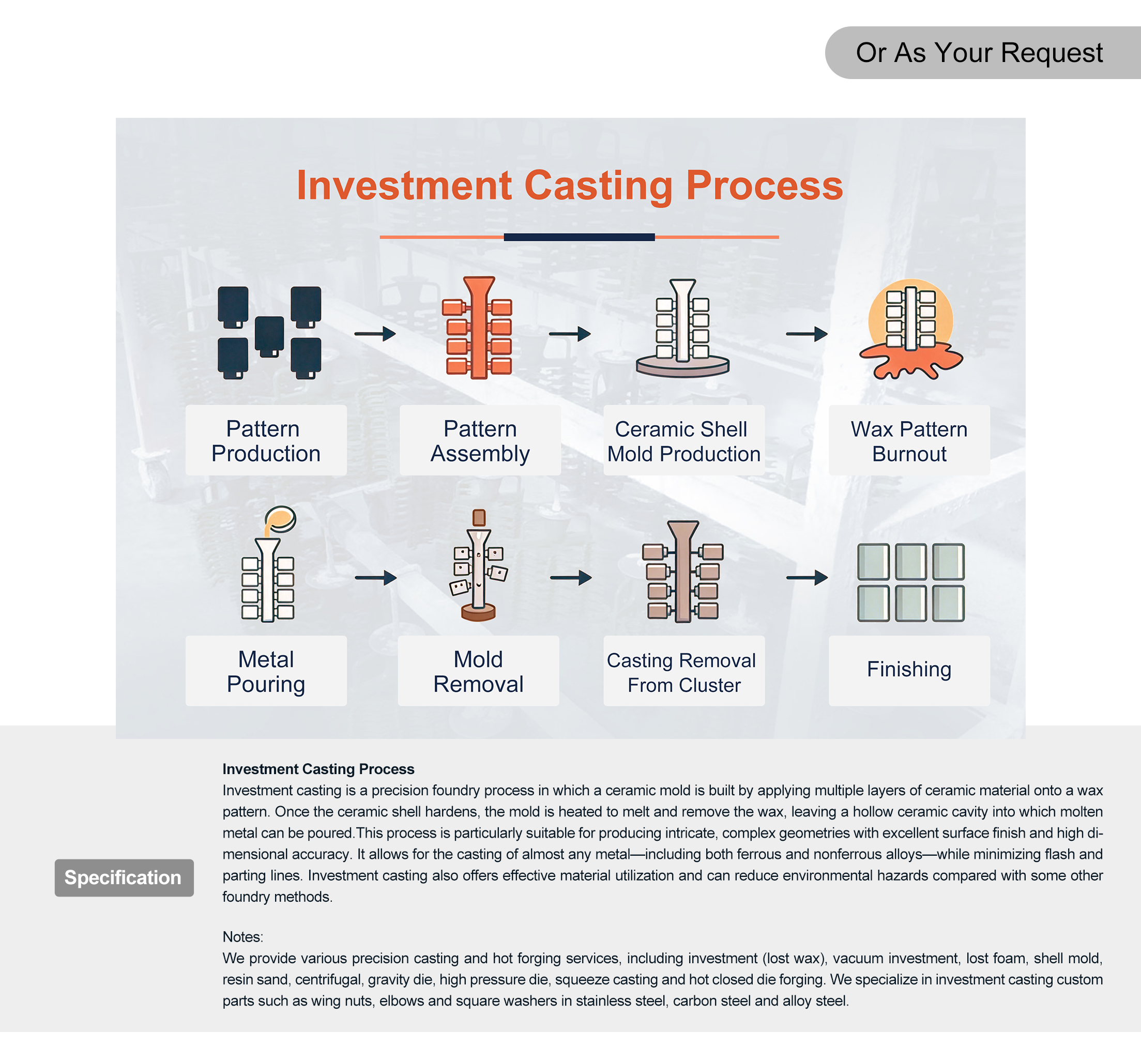
Our flagship manufacturing workflow centers on investment casting (lost‑wax casting), covering vacuum investment casting tailored for high‑performance alloy workpieces. To accommodate diverse project budgets, component dimensions and production‑volume requirements, we also supply supplementary casting and forging technologies as alternative manufacturing routes, including lost‑foam casting, shell‑mold casting, resin‑sand casting, centrifugal casting, gravity‑die casting, high‑pressure die casting, squeeze casting and hot closed‑die forging. Investment casting remains our core strength for intricate, high‑accuracy precision casting parts requiring fine feature reproduction and premium surface quality. Our broad process portfolio allows our engineering team to select the most cost‑effective manufacturing solution matched to your drawing specifications, batch quantity and real‑world operating conditions. Investment casting is a precision foundry process in which a ceramic mold is built by applying multiple layers of ceramic material onto a wax pattern. Once the ceramic shell hardens, the mold is heated to melt and remove the wax, leaving a hollow ceramic cavity into which molten metal can be poured.
Precision casting parts, also widely known as investment casting or lost‑wax casting components, deliver high‑integrity metal hardware built for complex industrial operating environments. Produced via a multi‑stage ceramic shell casting workflow, these metal components reproduce intricate geometries, fine details and thin‑wall structures that cannot be easily achieved by standard sand casting or pure CNC machining from solid stock. Instead of assembling multiple stamped or welded segments, precision casting consolidates functional features into a single monolithic metal piece. Core functions include mechanical load‑bearing, component positioning, locking & clamping, fluid flow control and structural support for industrial assemblies. Typical finished precision casting parts cover exhaust pipe clamps, Exhaust Pipe Fitting flange unions, elbow fittings, impellers, pump housings, sheet metal fabrication support brackets, wing nuts and custom fixture bases used across heavy‑duty equipment.
Our foundry holds over 20‑years of specialized precision manufacturing experience with ISO 9001:2015 and RoHS certification, supporting both OEM and ODM custom orders for global engineering companies and original equipment manufacturers. Compared with traditional casting solutions, precision casting parts minimize parting‑line flash and reduce secondary machining volume, while maintaining consistent material performance batch‑to‑batch. Whether you need prototype samples or mass‑production volumes, these custom metal castings serve mission‑critical assemblies where dimensional stability and material reliability are non‑negotiable.
Technical Specifications - Stainless steel Aluminum investment casting
All precision metal casting parts are built against customer drawings, below lists standardized baseline technical parameters for reference; final values are confirmed according to your 2D drawings or 3D model files.
| Parameter Category | Specification Details |
|---|---|
| Weight Range | 0.01 kg ~ 100 kg per component |
| Maximum Overall Dimension | Up to 1000 mm |
| Minimum Wall Thickness | 1.0 mm‑1.5 mm (depends on alloy and geometry) |
| Dimensional Tolerance | ISO 8062‑3 CT5‑CT7 for silica‑sol investment casting process |
| As‑Cast Surface Roughness | Ra 1.6 μm ~ Ra 12.5 μm |
| Thread Options | Pre‑cast thread bosses; post‑casting CNC tapping for metric / imperial threads |
| Surface Treatment | Shot blasting, passivation, electro‑polishing, zinc plating, powder coating, painting |
| Applicable Standards | ISO 9001:2015, RoHS; material compliance to ASTM, DIN, EN, AISI standards |
| Inspection | CMM dimensional check, visual defect inspection; optional NDT non‑destructive testing |
Material‑Specific Reference Performance - investment casting aluminium stainless steel
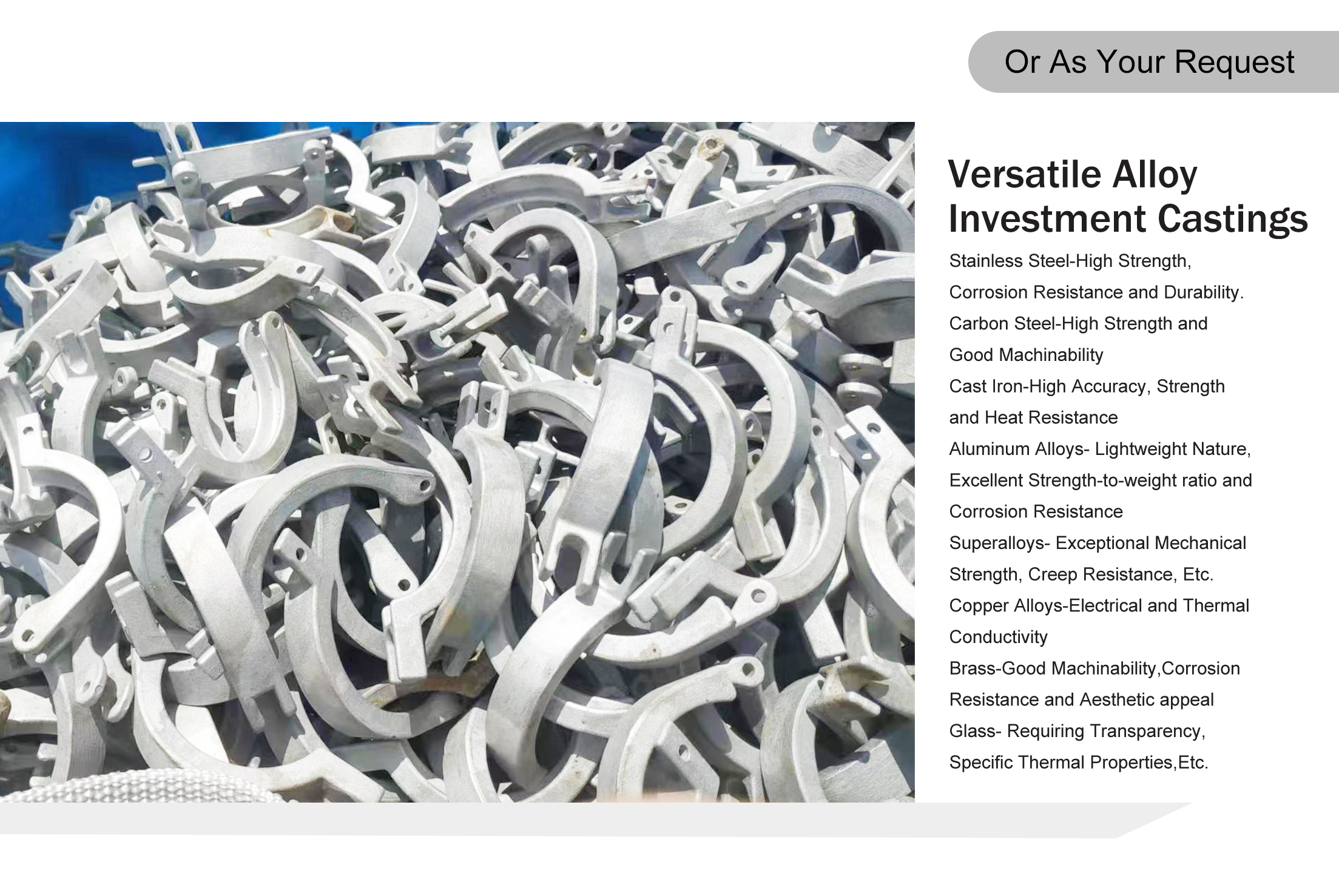
| Material | Properties | Environmental Suitability | Cost Considerations | Applications |
Stainless Steel | High strength, corrosion resistance, durability. | Excellent for harsh environments, high temperatures. | More expensive, low-maintenance. | Automotive parts, medical devices golf club heads. |
Carbon Steel | High strength, good machinability. | Suitable for general environments, low corrosion resistance. | Cost Considerations. | Automotive components, machinery, construction hardware. |
Aluminum Alloys | Lightweight, good strength-to- weightratio, corrosion resistance. | Ideal for weight-sensitive environments with good corrosion resistance. | More expensive than carbon steel. | Aerospace, automotive components electronics. |
Super Alloys | Exceptional mechanical strength. creep resistance. | Ideal for high-temperature and high-corrosion environments. | High cost, long-term durability. | Gas turbines, aerospace, marine components. |
Copper Alloys | Excellent conductivity, corrosion resistance. | Suitable for electrical and marine environments. | Moderate Cost | Electrical components, plumbing parts, decorative items. |
| Brass | Good machinability, corrosion resistance, aesthetic appeal. | Suitable for decorative and corrosion-resistant environments. | Moderate Cost | Valves, fittings, decorative items. |
| Cast Iron | High accuracy, strength, heat resistance. | Suitable for high-strength applications, may corrode in acidic conditions. | Affordable | Engine components, pipes, machinery. |
| Glass | Transparency, specific thermal properties. | Specialized applications requiring transparency and thermal resistance. | Higher cost due to complexity. | Optical components, specialized containers, lenses. |
Stainless Steel (304 /316 /17‑4PH): High tensile strength, outstanding corrosion resistance; suitable for wet, chemical and outdoor working conditions.
Carbon & Alloy Steel: Excellent mechanical strength and good machinability, ideal for heavy‑load structural hardware, cost‑efficient for general‑purpose industrial hardware.
Aluminum Alloys: Low weight, high strength‑to‑weight ratio, moderate corrosion resistance for lightweight assemblies.
Superalloys: Exceptional high‑temperature creep‑resistance, designed for high‑heat aerospace and gas‑turbine components.
Brass & Copper Alloys: Good electrical‑thermal conductivity, fine surface aesthetics for fitting and decorative hardware.
Note: Static and dynamic load capacity cannot be generalized, load parameters must be evaluated combined with material grade, heat‑treatment status and actual working conditions of end‑use equipment.
Features & Benefits - Precision casting manufacturer
Integrated one‑piece construction for stable positioning and anti‑loosening performance
Many multi‑part welded assemblies can be redesigned as one single precision‑cast component. By forming locating bosses, clamping lugs and mounting seats during casting, we eliminate welding seams and bolted intermediate joints which are common failure sources for vibration‑prone equipment. This integrated structure reduces the risk of part loosening under cyclic mechanical shock, and guarantees repeatable locating accuracy during repeated installation and disassembly.
Applications - Investment casting manufacturer
Precision casting parts are widely deployed in industrial automation, general machinery, automotive manufacturing, conveying equipment and tooling fixtures, alongside aerospace, agriculture machinery, oil‑gas and medical‑device industries.
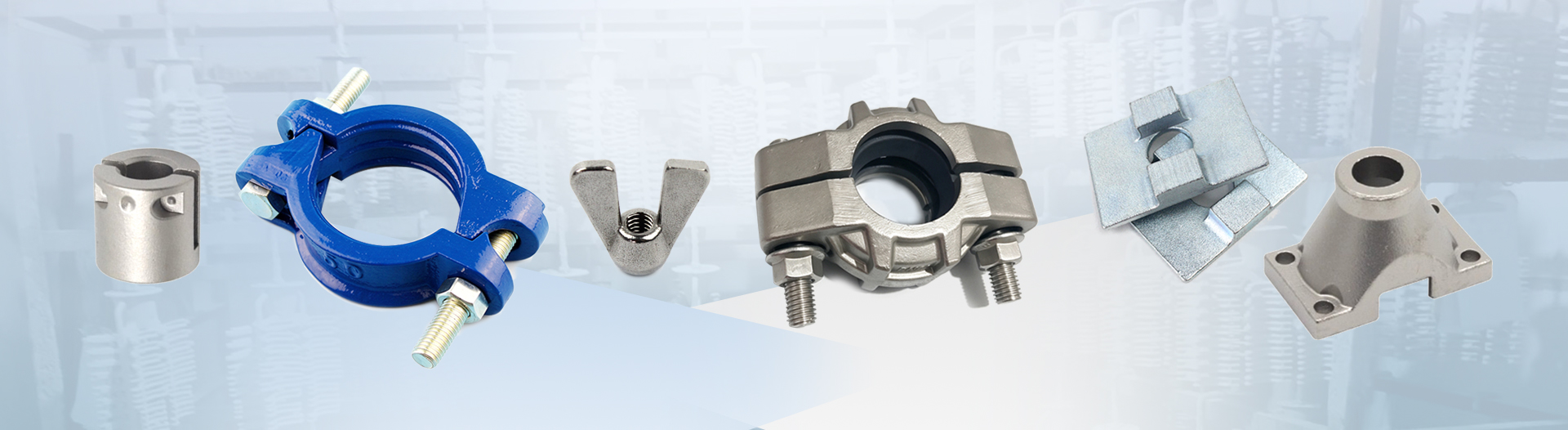
Custom‑cast support brackets, pipe clamps, equipment housings and locating bases serve automated production lines and robotic assemblies. Precision‑cast components hold sensors, fluid pipelines and actuator hardware, maintaining positioning stability under continuous cyclic operation. Complex‑geometry castings replace multiple sheet‑metal welded pieces to simplify automation station design.
For pump and valve equipment, precision casting produces impellers, pump casings, valve bodies and bonnets with complex internal flow passages. Bearing housings, sprocket wheel blanks and transmission‑system structural castings also rely on this process to achieve complex internal cavity features difficult to machine.
Precision casting parts are used for turbocharger housings, exhaust manifolds, transmission housings and suspension system components. The near‑net‑shape casting technology realizes thin‑wall lightweight designs, consolidates multiple discrete parts, reduces later‑stage machining workload and lowers the total complexity of automobile component assembly.
Sprockets, chain‑guide blocks, tension‑adjustment brackets and structural connecting castings for material conveyor systems. These components endure continuous friction and impact from transported goods; high‑strength cast alloys improve wear‑resistance and extend service cycles for bulk‑material transport hardware.
Custom precision‑cast jig bases, fixture locating blocks and clamping components for workshop tooling. Cast‑in positioning reference surfaces guarantee fixture repeat accuracy, while integrated clamping lugs reduce the number of separate fasteners required for tool‑set assembly.
Beyond above fields, precision casting parts also find wide application in agricultural machinery, aerospace propulsion hardware, oil‑gas downhole valve assemblies and medical surgical instrument components.
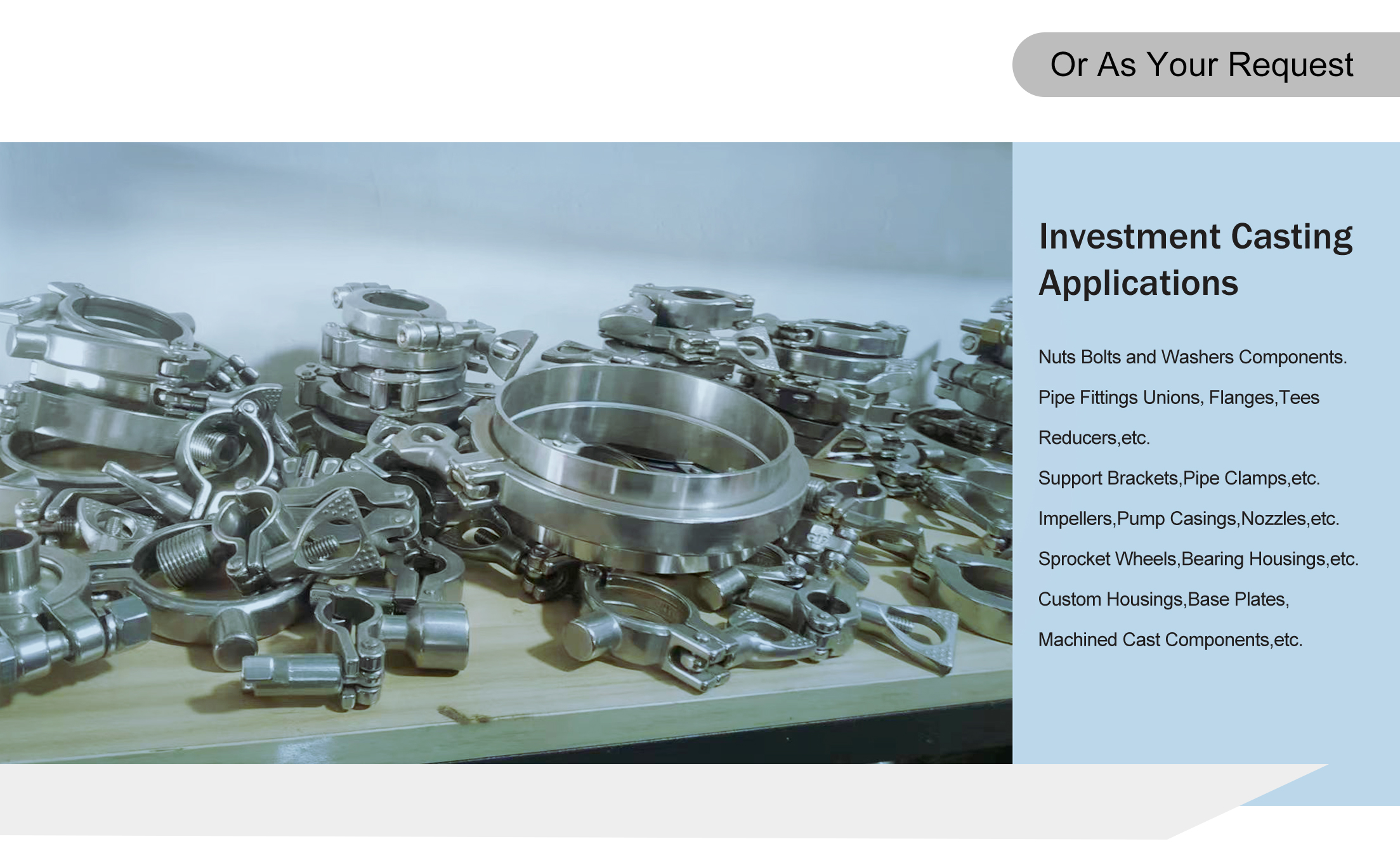
Customization Options - Investment casting parts shandong pdm industry
We support full OEM and ODM customization for precision casting parts, adapting products to your exact engineering requirements.
Custom Dimensions & Geometry: Develop castings from customer‑supplied 2D engineering drawings or 3D files (STEP, IGES, STP format). We offer DFM (Design for Manufacturability) feedback to optimise wall thickness, draft features and remove non‑manufacturable details before tooling creation. Prototyping for low‑volume batches and mass serial production are both available. Where investment casting is not economically ideal, our team will propose alternative processes among our other casting and forging capabilities.
Custom Material Grades: Full selection including various stainless steel grades, carbon/alloy steel, aluminium alloys, brass, bronze and high‑temperature superalloys to match mechanical, corrosion or temperature requirements.
Thread & Functional Features: Pre‑cast thread bosses for subsequent tapping, or fully machined metric / imperial threads. Custom‑cast logos, part‑number marking, mounting holes and internal flow channels are supported.
Heat Treatment & Surface Processes: Normalising, quenching & tempering, solution annealing as required. Surface options include shot blasting, passivation, electro‑polishing, zinc plating and powder coating.
Special Compliance Requirements: Support RoHS compliance, material test reports (MTR), CMM inspection reports and optional NDT non‑destructive testing such as X‑ray or penetrant inspection for safety‑critical components.
FAQ - Premium investment casting stainless steel components
Q1: How do I select suitable precision casting parts precision die casting service and proper manufacturing process for my industrial project?
dead (short tail) end of the rope. This orientation minimizes wire strand damage and prevents slip. Multiple clips should be spaced per rigging best practice, and the finished assembly must be load‑tested before service. We do not recommend using coated wire rope unless the coating is removed from the clamping contact zone.


