
Views: 0 Author: Site Editor Publish Time: 2026-03-17 Origin: Site
If you’ve ever designed a fixture, an indexing mechanism, a guarding latch, or a positioning aid in an automated line, you already know the truth: small components often decide whether a system feels stable or “finicky.” Spring Plungers are a perfect example. They’re simple parts—usually a threaded body, an internal spring, and a plunger tip—but they solve critical functions: locating, indexing, detenting, clamping, and holding parts in repeatable positions. When the spring plunger is well selected, operators barely notice it. When it’s wrong, you get vibration, inconsistent positioning, jammed motion, premature wear, or repeated adjustments.
At PDM Industry, we work with customers who use spring plungers in automation fixtures, industrial machinery, tooling, packaging lines, and assembly equipment. In our experience, choosing the right spring plunger is less about picking a catalog part and more about matching five practical realities: required force, stroke, mounting style, tip interaction, and environmental conditions. This guide will walk you through a clear selection process so you can specify the right spring plungers for reliable, long-term industrial use.
Spring plungers are widely used in automation because they provide a simple, reliable way to create repeatable positioning and controlled holding force without complex mechanisms. In automated lines and industrial equipment, they are commonly applied for indexing and positioning, where the plunger locks a moving part into consistent, repeatable locations—useful for turntables, sliding guides, and step-by-step assemblies. They are also used for detent functions, creating the “click” feeling in levers, gates, slides, and rotating parts so operators or machines can confirm a stable position.
In fixtures, spring plungers help with workpiece location, holding parts in the correct place before clamps engage, which improves repeatability and reduces setup time. They are also practical for safety covers and access panels, keeping doors stable while still allowing controlled opening. In modular tooling, they support quick alignment during changeovers. In light-load systems, they act as anti-vibration support, pressing components to reduce rattling and movement. The core value is consistent force plus automatic return.
Before choosing a model, clarify what you need the spring plunger to do:
You need repeatable “stop points” or snap-in positioning. Typically:
medium force is enough
repeatability matters more than maximum holding force
tip shape and wear behavior matter a lot
You want the plunger to maintain pressure against a component to reduce movement. Typically:
lighter continuous force may be better than high force
low wear and smooth contact are important
material and tip style affect long-term performance
You want the plunger to prevent accidental movement or opening. Typically:
stronger force is required
mounting strength and thread engagement become more critical
the plunger tip must resist impact and repeated cycling
Defining the function upfront prevents over-specifying or under-specifying the spring force.
Spring plungers come in different force levels. The “right” force is the lowest force that reliably achieves the job.
Ask:
How much vibration or external load acts on the part?
Is the motion manual or motor-driven?
Do you need the plunger to lock into a hole/groove or just press against a surface?
Is the mechanism vertical (gravity working against you) or horizontal?
Will operators need to override it by hand?
Practical rule:
If operators must frequently move the mechanism by hand, avoid overly high spring force. Too much force increases wear, makes movement feel stiff, and can cause people to “slam” parts, leading to tip damage.
Stroke is the plunger travel distance—how far the pin can retract.
Choose enough stroke to accommodate manufacturing tolerance and alignment variation.
If stroke is too short, the plunger may bottom out and fail to engage reliably.
If stroke is too long, you may lose stiffness or create unnecessary movement.
For automation fixtures, stroke should match:
the depth of the locating hole or groove
the tolerance stack in your assembly
the expected wear over time
Tip style affects engagement, wear, noise, and positioning accuracy.
Rounded/ball tip: smooth detent feel, good for ramps and repeated contact
Conical tip: strong locating in holes or grooves, more “positive” indexing
Flat tip: stable pressure contact, good for holding and anti-vibration support
Soft tip / non-marring: protects delicate surfaces and reduces scratches
Tip choice should match the contact surface:
hardened steel vs aluminum
painted surfaces
stainless surfaces
plastic or composite components
If the mating part is softer than the plunger tip, a sharp tip can create wear marks quickly. In those cases, using a rounded or protected tip can extend system life.
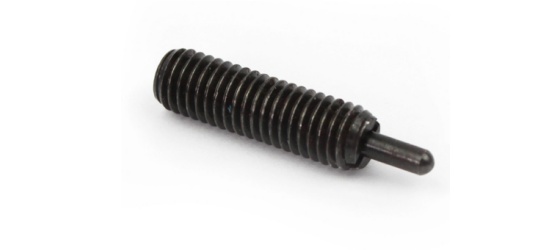
A spring plunger is only as stable as its installation.
thread size and pitch match your equipment standards
minimum thread engagement is sufficient
mounting surface thickness supports repeated load
locking method prevents loosening (jam nut, thread locking, or design lock)
For high-vibration systems, mounting security is critical. A properly selected plunger can still fail if it backs out over time.
Automation environments vary widely:
clean assembly lines
humid workshops
washdown food environments
chemical exposure
outdoor equipment
high-temperature machinery zones
Stainless steel: better corrosion resistance in humid or washdown environments
Alloy steel with coating: strong, good for general industrial use when corrosion is controlled
Special coatings: can improve wear resistance or corrosion resistance depending on need
Also consider whether the spring itself must resist corrosion. In humid environments, the internal spring is often the limiting factor for long-term reliability.
In automation, some spring plungers cycle thousands of times per day. For high-cycle use, you should prioritize:
smoother tip interaction
wear-resistant materials
correct force (not too high)
easy access for replacement
If the plunger is buried inside equipment, you may want a more conservative, longer-life selection so maintenance intervals are manageable.
Selection Factor | What it Controls | Practical Tip |
Spring force | holding strength and detent feel | choose minimum force that is reliable |
Stroke | tolerance handling and engagement | ensure enough travel for real variation |
Tip style | wear, noise, engagement | match tip to surface and function |
Thread/mount | stability under vibration | ensure proper engagement and locking |
Material | corrosion and wear life | choose stainless for harsh environments |
Cycle frequency | durability need | high cycle requires smoother, tougher design |
This causes stiff movement, faster wear, and operator frustration.
Sharp tips on soft materials cause grooves, scratches, and loss of repeatability.
Too little stroke or incorrect hole depth causes unreliable engagement.
Without a locking method, plungers can back out over time.
At PDM Industry, we typically recommend spring plungers based on the real interaction between the plunger and the mating part. We ask customers about force needs, stroke, cycle frequency, mounting conditions, and environment. For automation fixtures, we often focus on repeatability and wear reduction—because a plunger that lasts longer and engages consistently protects the whole mechanism from instability. For industrial equipment, we prioritize mounting security and material choice to ensure long service life in real shop conditions.
If you tell us your application type (indexing, holding, latching), the mating material, and expected cycle rate, we can help suggest a suitable spring plunger configuration and specification approach.
Choosing the right Spring Plungers for automation and industrial equipment is about matching the plunger to real operating conditions: required force, stroke, tip style, mounting strength, and environment. When correctly selected, a spring plunger improves repeatability, reduces vibration-related movement, and makes mechanisms feel more stable and professional. When poorly selected, it can create wear, noise, inconsistency, and unnecessary maintenance.
To learn more about spring plungers and application support for automation fixtures and industrial equipment, visit www.pdmindustry.com for more information. Our team at PDM Industry is always ready to help you select reliable parts that keep your equipment performing consistently over the long term.
They are used for indexing, positioning, detent functions, holding, and repeatable alignment in fixtures and mechanisms.
Choose the lowest force that reliably holds or indexes the part under real vibration and load conditions.
Conical tips provide strong “positive” engagement in holes or grooves, while rounded tips offer smoother detent action and less wear.
Stainless steel is recommended when corrosion resistance is important, such as in humid, washdown, or outdoor environments.


