
Views: 0 Author: Site Editor Publish Time: 2026-03-13 Origin: Site
When you’re designing fixtures, jigs, enclosures, or adjustable mechanisms, the smallest component can determine whether the whole assembly feels precise—or annoying. That’s exactly where Spring Plungers and ball plungers come in. Both create a repeatable “push-and-hold” function for positioning, indexing, detenting, or locating parts. They look similar on a BOM, but in real applications they behave differently. The difference shows up in the contact shape, wear pattern, holding feel, and how forgiving they are with misalignment, vibration, and repeated cycling.
From our manufacturing perspective, the best question is not “Which one is better?” but “Which one fits the contact surface, the load direction, and the user experience you want?” At www.pdmindustry.com, we work with customers who need dependable plunger solutions for industrial equipment, automation modules, tooling fixtures, and mechanical assemblies. In this guide, we’ll break down the key differences between spring plungers vs ball plungers, explain when to use each type, and share a practical selection checklist you can apply to your next design.
A spring plunger typically consists of:
a threaded body (or press-fit body)
an internal spring
a projecting pin (plunger tip) that moves in and out
When the plunger tip contacts a surface, the spring compresses. When the surface moves away or aligns with a receiving hole/slot, the spring pushes the pin outward again. This makes spring plungers useful for:
locating and indexing
holding a part in a set position
providing repeatable stops
quick fixture positioning
Spring plungers can be configured with different tip shapes (rounded, flat, conical, or special tips), which affects holding feel and wear.
A ball plunger has a similar internal spring, but instead of a pin tip it uses a ball that protrudes from the body. The ball retracts under load and springs back when released or when it meets a detent groove or recess. Ball plungers are widely used for:
detent functions (click positions)
light indexing
holding panels or moving parts in place
assemblies where smooth sliding contact is preferred
Because the contact point is a ball, ball plungers often provide smoother engagement on moving surfaces.
The core difference is simple:
Spring plungers use a pin tip (line/area contact depending on tip shape).
Ball plungers use a ball tip (point contact with rolling behavior).
That single difference affects everything else: wear, surface damage risk, holding stability, and user feel.
Spring plungers often feel more “positive” and stable when seating into a hole or notch, especially with a pin tip designed for indexing.
Ball plungers often feel smoother and more “detent-like,” especially when moving across a surface or engaging shallow grooves.
If you want a stronger stop or more rigid positioning, spring plungers are often preferred. If you want smoother motion and repeated detent engagement, ball plungers often make the mechanism feel more refined.
A pin can concentrate force along a smaller edge or contact patch, which may create clearer wear marks over time—especially on softer materials.
A ball can reduce sliding friction because it can roll slightly during movement, which often reduces scuffing in sliding applications.
If the mating surface is softer (aluminum, plastic, coated panels), ball plungers can be gentler. If the mating surface is hardened and designed for repeated indexing, spring plungers can hold position more firmly.
Ball plungers often tolerate small misalignment better when the mating feature is a groove or curved surface, because the ball naturally centers.
Spring plungers can be excellent for alignment when the receiving feature is correct, but they can feel harsher if the pin tip catches edges.
For mechanisms with imperfect alignment or moving parts, ball plungers can be more forgiving.
Both types come in different sizes and force ratings, but generally:
Spring plungers are often chosen where more stable, repeatable positioning is needed (fixture indexing, stops).
Ball plungers are often chosen for detent functions where smooth engagement matters more than rigid location.
Factor | Spring Plungers | Ball Plungers |
Contact shape | Pin tip | Ball tip |
Typical function | Indexing, locating, stops | Detents, smooth holding, latching feel |
Engagement feel | More positive “lock-in” | Smoother “click” and glide |
Surface marking risk | Higher on soft surfaces (depends on tip) | Often lower due to rolling contact |
Best mating features | Holes, notches, slots, flats | Grooves, detent pockets, sliding surfaces |
Misalignment tolerance | Good when aligned; can catch edges if misaligned | Often more forgiving |
Common use cases | Fixtures, jigs, machine stops | Panels, covers, adjustable mechanisms |
Choose Spring Plungers when you need:
strong, repeatable positioning in a fixture
indexing into a drilled hole pattern
a mechanical stop that resists movement
a more “locked” seating feel
higher stability in a fixed position
machining fixtures and jigs
quick-change tooling plates
indexing tables and guides
adjustable machine components
positioning pins for equipment modules
In these cases, spring plungers behave like a compact, built-in locator that is easy to assemble and service.
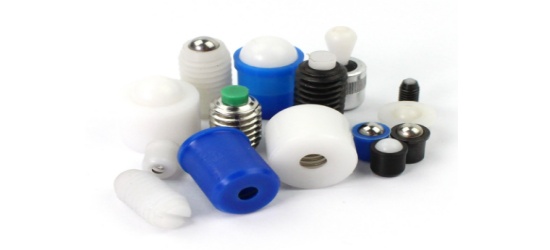
Choose ball plungers when you need:
smooth detent action for adjustable positions
reduced surface scuffing during movement
better tolerance for slight misalignment
a lighter, more user-friendly “click” engagement
sliding contact on tracks or grooves
access panels and covers
adjustable handles and levers
consumer-facing equipment where feel matters
mechanisms with repeated movement across surfaces
light indexing in grooves or shallow recesses
Ball plungers are often the better choice when you want the mechanism to feel smooth and controlled, not stiff.
A practical selection process we recommend:
Hole/notch indexing → often spring plunger
Groove/detent pocket sliding → often ball plunger
firm and stable position → spring plunger
smooth detent click → ball plunger
soft mating surface → ball plunger (often safer)
hardened mating surface → either, depending on design intent
Both plungers are available in different spring forces. The right force depends on vibration, load, and how easy you want it to disengage.
Confirm thread size, body length, and installation direction.
Item | What to Specify | Why It Matters |
Plunger type | Spring plunger or ball plunger | Defines contact behavior |
Thread size and length | M size / inch size + body length | Ensures fit |
Tip style | Pin tip shape or ball size | Affects engagement and wear |
Spring force | Light / medium / heavy range | Controls holding feel |
Mating surface material | Steel, aluminum, plastic, coated | Influences wear choice |
Environment | Dust, coolant, outdoor exposure | Impacts material and sealing |
Cycle frequency | Occasional vs high cycling | Affects durability selection |
This kind of detail reduces mismatched orders and improves performance in real assemblies.
Choosing only by thread size
Two plungers with the same thread can behave completely differently.
Ignoring the mating surface
A pin tip on soft material can leave marks quickly; a ball tip may reduce that risk.
Over-specifying spring force
Too much force can make mechanisms hard to operate and accelerate wear.
Not planning for contamination
In dusty environments, choose designs that resist jamming and allow easier cleaning.
So, Spring Plungers vs Ball Plungers—what are the key differences and when should you use them? Spring plungers typically provide a more positive, stable indexing and stop function through a pin-style tip, while ball plungers offer smoother detent engagement through a ball contact that can be more forgiving and gentler on sliding surfaces. The best choice depends on your mating feature (hole vs groove), the feel you want (firm vs smooth), surface material, and required holding force.
At www.pdmindustry.com, we help customers select plunger solutions that match real-world assembly needs—whether you’re building fixtures, equipment modules, adjustable mechanisms, or enclosure systems. If you’re choosing between Spring Plungers and ball plungers, you can learn more through www.pdmindustry.com and contact our team for product details and selection support.
Spring plungers use a pin tip for positioning and indexing, while ball plungers use a ball tip that provides smoother detent engagement and often better sliding contact.
Use spring plungers when you need firm, repeatable positioning—especially when the plunger seats into holes, notches, or fixed indexing points.
Often yes. Ball plungers can reduce scuffing and marking because the ball contact can roll slightly, making them more suitable for aluminum, coated parts, or plastic surfaces.
Specify thread size, body length, tip style, spring force, mating surface material, environment, and cycle frequency to ensure the plunger matches your application.


