Views: 0 Author: Site Editor Publish Time: 2026-09-23 Origin: Site
Ever stripped a bolt deep inside a machine cavity during final assembly? It is a mechanical nightmare. Choosing the wrong fastener triggers costly project delays, severe maintenance headaches, and compromised structural integrity. Field failures are entirely preventable. Mechanical engineers and procurement specialists must grasp the exact mechanical differences between two of the most ubiquitous fasteners in the industrial sector.
Both serve as the literal glue holding modern infrastructure together. Yet, they operate under entirely different spatial and mechanical rules. This comprehensive guide strips away the guesswork. We directly compare tooling dynamics, clearance requirements, and load-bearing capabilities from a real-world engineering perspective.
Space and Clearance: Socket configurations are engineered for microscopic spatial constraints and counterbored holes. Traditional hex styles demand significant lateral clearance to accommodate the swing arc of a wrench.
Tooling Dynamics: Internal drives allow for precise top-down access. External drives rely on heavy spanners or impact sockets for high-torque side access.
Tensile Strength: Heat-treated alloy steel manufacturing allows socket cap screws to frequently boast higher tensile strength compared to standard structural bolts.
Standardization: Mastering international specifications is crucial for accurate B2B procurement and strict engineering compliance.
Material Selection: The operating environment dictates the metallurgy. Opting for stainless variants sacrifices a fraction of absolute yield strength in exchange for critical long-term corrosion resistance.
To make an informed procurement decision, look closely at the fundamental mechanics of the fastener. These components are precision-engineered for specific environments where traditional wrenching is physically impossible.
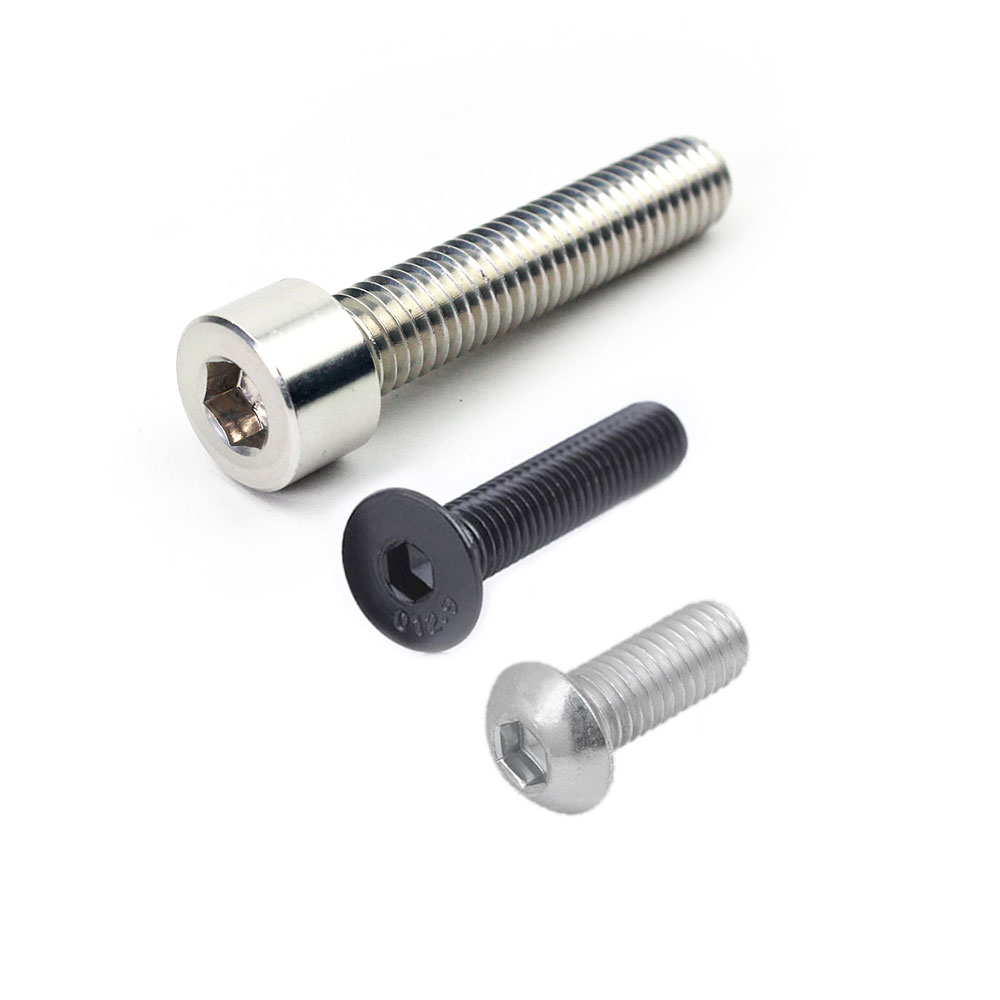
The defining characteristic of this fastener is a smooth cylindrical head combined with a recessed internal hexagonal drive. Rather than manipulating the fastener from the outside, the technician drives it from the inside. This internal mechanism requires a dedicated hex bit driver that must seat firmly into the recess.
While often used interchangeably on the shop floor, a distinct technical difference exists. High-quality socket head bolts and screws feature exceptionally tight machining tolerances. Standard manufacturing sizes typically range from M1.6 up to M64, utilizing materials like carbon steel and stainless steel. Cap screws generally feature a chamfered point designed to be threaded directly into a tapped hole without needing a mating nut. Bolts are intended to pass through unthreaded clearance holes and secure with a nut on the opposite side. Regardless of the threading style, the internal drive remains the unifying feature.
The primary mechanical advantage here is sheer spatial efficiency. The tool fits entirely inside the head. Engineers can design counterbored holes, allowing the fastener to sit completely flush with the surrounding metal surface.
Furthermore, these components are predominantly forged from high-strength alloy steel. It is standard practice to see metric versions rated at property class 12.9. This delivers a massive minimum tensile strength of 1220 MPa. Designers can achieve immense clamping force with a remarkably small footprint, shaving critical weight off the final mechanical assembly.
If internal drives are the scalpel of the engineering world, hex bolts are the sledgehammer. They are the traditional rugged workhorses of heavy machinery, pump casings, civil construction, and structural engineering.
A hex bolt features a prominent six-sided external head. This rugged geometry is specifically designed to be gripped from the outside using an adjustable wrench, box-end spanner, or heavy-duty socket. The tool wraps entirely around the perimeter of the head. Rotational force is distributed across six distinct flat bearing surfaces.
Adhering to precise verifiable standards is non-negotiable when sourcing hardware for industrial applications. For example, din 933 hexagon bolts represent a cornerstone of metric fastening systems. This specific standard dictates that the bolt is fully threaded. The threading extends seamlessly from the very tip all the way to the underside of the head. Available in robust grades like 8.8, 10.9, and 12.9, they frequently utilize zinc plating or black oxide treatments for enhanced field durability.
This contrasts sharply with the DIN 931 standard outlining a partially threaded shank. Fully threaded variants are specifically chosen when a fastener must be driven into a tapped blind hole all the way to the head. They are also ideal when clamping extremely thin sheet metals where a smooth shank would prevent a tight grip.
The standout benefit of the external design is raw torque capacity. The outside gripping mechanism allows technicians to utilize long-handled breaker bars or pneumatic impact drivers. This transfers massive amounts of torque.
In addition, the external grip drastically reduces the risk of cam-out. This frustrating and dangerous phenomenon occurs when a tool slips out of a drive recess during high-torque tightening. Because a heavy socket surrounds the entire head, force transfer remains highly stable. This makes these fasteners the undisputed choice for heavy structural steel connections.
Choosing the right component requires a ruthless evaluation of the physical constraints within your project. Let us look at a direct comparison across critical engineering metrics.
Feature | Socket Head Bolts | Hex Head Bolts |
|---|---|---|
Drive Type | Internal hex key | External wrench or socket |
Clearance Needed | Strictly Top-down | Side-to-side required for wrench swing arc |
Flush Mounting | Yes via counterbored holes | No, head protrudes above surface |
Bearing Surface | Smaller concentrated load | Larger superior load distribution |
Typical Strength | Very High up to Class 12.9 | Moderate to High Class 8.8 to 10.9 |
Looking at recent manufacturing shifts, the rapid expansion of the electric vehicle and advanced robotics sectors heavily skews modern engineering toward miniaturization. This trend demands fasteners that deliver immense clamping force within microscopic footprints. Consequently, internal socket drives are increasingly dominant in high-tech assembly lines. Conversely, the ongoing global surge in civil infrastructure and renewable energy projects ensures the traditional external hex remains in massive demand for heavy-duty frameworks.
Tooling directly dictates assembly line rhythm and field maintenance protocols. Internal drives require hex bits that are highly compact and excellent for precision work. However, wiping away thick grease to properly seat a tool deep inside an industrial pump housing can be extremely tedious.
External hexes require adjustable wrenches or ratcheting sockets. In dirty field maintenance scenarios, an external head is far easier to wipe clean and grip securely. The satisfying engagement of a heavy-duty impact socket over a hex head allows for incredibly rapid assembly in open spaces.
This single factor often makes the decision for you. Socket variants require strictly top-down access. Imagine trying to secure a component deep inside a narrow aluminum channel. As long as your extension bar can reach the top of the bolt, you can tighten it.
Hex heads demand side-to-side clearance. The engineer must account for the physical swing arc of the wrench. If the installation point is located flush against a retaining wall, an external drive simply cannot be tightened.
Internal drive screws often utilize higher-grade alloy steel. However, external hexes possess a distinct mechanical advantage regarding the bearing surface. The flat underside of a hex head offers a significantly wider surface area.
Specifically, this wider footprint distributes the crushing clamping load over a broader section of the mating material. When fastening softer substrates like aluminum or plastics, a hex bolt is far less likely to embed or chew into the material. If a socket head must be used on softer materials, a hardened steel washer is mandatory to prevent severe surface deformation.
On the factory floor, safety and aesthetics are deeply intertwined. Fasteners installed in counterbored holes leave a beautifully smooth uninterrupted surface. On rotating pump shafts, conveyor belts, or consumer-facing products, this flush finish prevents a worker's sleeve from catching on spinning metal. Hex bolts inherently leave a raised angular profile that can present a severe snag hazard in dynamic mechanical environments.
Engineering a robust joint is only half the battle. Specifying a metal that will survive its environment is equally critical. The decision almost always comes down to balancing raw tensile strength against long-term environmental resilience.
Standard high-strength fasteners are predominantly forged from carbon alloy steel and treated with a thin black oxide finish. This provides exceptional fatigue resistance and sheer clamping power. Unfortunately, it offers virtually zero protection against rust. If exposed to rain or road salt, they will quickly oxidize.
When a project faces harsh elements, engineers must pivot to stainless steel socket head bolts. It is vital to understand that austenitic stainless steel, such as A2-70 or A4-80 grades, is metallurgically softer than heat-treated alloy steel. You gain unparalleled rust resistance through a self-repairing chromium oxide layer. However, the absolute yield strength of the joint drops slightly. Mechanics must carefully recalculate torque specifications to avoid shearing the softer stainless metal during installation.
The unique properties of stainless alloys make them mandatory rather than optional in several highly regulated sectors. Saltwater aggressively eats standard carbon steel. Grade 316 stainless contains added molybdenum and is universally specified for marine engineering and coastal infrastructure. Hygiene cannot be compromised in food processing. Stainless hardware easily withstands high-pressure steam cleaning and caustic sanitation chemicals. Medical devices rely on the non-magnetic properties of stainless hardware for surgical equipment and MRI machines.
Purchasing hardware based on visual similarity is a recipe for disaster. Components must adhere to strict verifiable international standards to ensure thread consistency, dimensional accuracy, and predictable failure points.
In the global supply chain, the Deutsches Institut für Normung and the International Organization for Standardization provide the baseline. DIN 912 is the globally recognized blueprint for metric socket cap screws. It defines exact head diameters and internal hex depths.
Similarly, when a structural joint requires threading from tip to head, specifying din 933 hexagon bolts guarantees the delivery of a fully threaded component. This ensures the fastener performs exactly as the mechanical engineer simulated in their CAD software.
Fastener Type | Common DIN | Threading Style | Primary Application |
|---|---|---|---|
Socket Head Cap Screw | DIN 912 | Partial or Full | Tight clearances and precision machining |
Hexagon Bolt Full Thread | DIN 933 | Full Thread | Tapped blind holes and thin sheet metal |
Hexagon Bolt Partial Thread | DIN 931 | Partial Thread | Heavy structural joints and high shear loads |
Commercial DIN standards simply are not enough in high-stakes arenas like aerospace or defense. A single sheared bolt on an aircraft can be catastrophic. These industries rely on Military Specifications or National Aerospace Standards. Hardware carrying these elite designations undergoes brutal non-destructive testing and magnetic particle inspection to spot microscopic fractures. It also requires absolute lot traceability back to the original steel foundry.
Theoretical metrics only matter when applied to real-world dirt, vibration, and stress. The winning fastener depends entirely on the physical constraints of your assembly line.
Internal drives dominate precision engineering due to their phenomenal strength-to-size ratio and flush-mounting capabilities. Mechanics rely on top-down access to secure valve covers within densely packed modern engine bays. Precision robotics require internal drives for assembling delicate aluminum extrusions where protruding heads would violently collide with moving gantries. Tool and die making relies on these fasteners for bolting complex injection molds where exterior surfaces must remain perfectly flat.
The external hex is superior when space is abundant and massive structural integrity is the primary metric. Ironworkers use heavy pneumatic impact wrenches on large hex heads to connect massive I-beams in skyscraper construction. Heavy infrastructure like water treatment flanges and oil pipelines rely on the wider bearing surface to prevent crushing the underlying metal under extreme hydraulic torque. Wood-to-metal construction utilizes the wide head to prevent metal brackets from pulling through softer wood grain.
Procuring the right hardware requires a systematic approach. Guessing leads to production bottlenecks and compromised safety. Follow this structured evaluation before submitting your next purchase order.
Assess lateral clearance: Evaluate the physical space. If the installation point is in a tight corner or deep recess, a top-down socket drive is mandatory. Hex is viable if you have plenty of room for a wrench swing arc.
Evaluate torque requirements: External hexes are generally preferred for heavy pneumatic impact tools. They are far less prone to tool slippage at extreme torque levels.
Consider aerodynamics and safety: Utilize a counterbored socket head if the joint is on a moving mechanism or an exterior surface. This eliminates dangerous snag hazards.
Identify environmental hazards: Will the assembly face saltwater, chemicals, or extreme weather? Prioritize metallurgy over head style by selecting highly corrosion-resistant alloys.
Identifying the right standard is only step one. Sourcing from a reputable supplier prevents catastrophic field failures. The global market is saturated with low-cost uncertified hardware that frequently fails to meet stamped tensile strength. Partner with suppliers operating under strict ISO 9001 quality management systems. Always insist on receiving Material Test Reports to verify the exact chemical makeup of your batch.
Choosing between an internal socket drive and an external hex bolt is rarely a matter of preference. It is a calculated engineering decision driven by spatial limitations, torque demands, and safety requirements. Internal drives offer unmatched precision and flush-mounting for high-tech applications. Traditional hex heads deliver the rugged high-torque reliability required for global infrastructure.
Pairing the correct head geometry with the appropriate metallurgy guarantees your assembly will withstand the test of time. Take the time to evaluate your clearance, calculate your loads, and specify the exact standards required for your build. For industrial-grade fastening solutions tailored to your exact specifications, exploring the comprehensive catalog at PDM Industry ensures you secure the perfect components. Upgrade your assembly line reliability with certified precision-engineered hardware today.
The absolute strength of any fastener is dictated by its material grade and heat treatment, not just the shape of its head. Standard socket cap screws are traditionally manufactured from premium high-strength alloy steel like Class 12.9 metric. Because of this industry norm, an off-the-shelf socket variant often possesses a higher tensile and yield strength than a standard Grade 5 or Class 8.8 hex bolt. Always verify the specific material grade stamped on the head before making structural assumptions.
Substitution is generally safe provided the thread pitch, diameter, and length are identical. You must account for the bearing surface. A socket head has a smaller cylindrical profile. This means its clamping force is concentrated over a narrower area. You must place a hardened steel washer beneath the socket head when fastening softer materials like aluminum or plastic to prevent crushing into the substrate.
The core difference lies in their threading profile. DIN 931 bolts are partially threaded. They feature a smooth unthreaded shank directly below the head before the threads begin. This unthreaded portion provides superior shear strength for structural joints. DIN 933 bolts are fully threaded all the way to the underside of the head. This makes them ideal for tapping into blind holes or clamping very thin materials where a smooth shank would interfere.
Stripping usually happens due to improper tool engagement. The most frequent culprit is mixing measurement systems, such as forcing a metric hex key into an imperial socket. This creates a sloppy fit that instantly rounds out the internal corners under pressure. Stripping also occurs if compacted dirt or grease prevents the hex key from seating fully at the bottom of the recess. Thoroughly clean the internal drive with a pick and ensure you use a high-quality exact-matching tool before applying torque.
Maximum torque depends entirely on the bolt diameter, thread pitch, and material property class. For instance, an M8 socket cap screw manufactured to Class 12.9 can handle significantly higher tightening torque than an M8 hex bolt in Class 8.8. Always consult standard engineering torque charts specific to your fastener grade. Apply force using a calibrated torque wrench to prevent yielding the metal.
Washers are not strictly mandatory but are highly recommended in most mechanical assemblies. A flat washer increases the bearing surface area. This prevents the hex head from galling or gouging the mating material during tightening. In high-vibration environments, adding a split lock washer or using a specialized flange hex bolt ensures the joint maintains its clamping force over time.