Views: 0 Author: Site Editor Publish Time: 2026-07-17 Origin: Site
Engineering and procurement teams face a constant dilemma in modern manufacturing. They must balance rapid operational cycle times against fail-safe securing requirements. Achieving both goals without compromise remains a daily challenge for facility managers. Traditional fastening solutions are ubiquitous and highly cost-effective for basic setups. However, high-vibration, repetitive-use, and harsh environments quickly expose their critical structural flaws. These demanding field conditions often require engineered alternatives. We must prevent catastrophic equipment failure and eliminate costly operational downtime.
Choosing the wrong fastener introduces hidden operational friction. Teams waste valuable hours replacing broken clips. Dropped cotter pins vanish into machinery housings. These tiny failures snowball into massive maintenance headaches. This article provides a strictly technical and commercial evaluation framework for your projects. We will explore the critical differences between standard options and positive-locking quick release systems. You will learn exactly how to choose the optimal fastening mechanism. We will guide you through shear strength ratings, material grades, and ergonomic designs. You will leave with actionable knowledge to improve your mechanical assemblies today.
Standard safety pins rely on passive tension and are best suited for static, low-budget, and low-vibration applications where rapid changeovers are not required.
A quick release ball lock pin utilizes a positive locking mechanism (detent balls), making it mandatory for high-frequency operations, safety-critical rigging, and rapid tooling changes.
Environmental variables dictate material choice; stainless steel ball lock pins are non-negotiable for marine, aerospace, or corrosive settings.
Every minute spent wrestling stubborn fasteners drains overall productivity. You might overlook the hidden costs of fastening initially. Time spent removing and replacing basic pins accumulates rapidly over a busy month. This slow process severely impacts overall production lines and operational efficiency. We constantly see operators struggling to extract bent pins during tight shift changes. Such operational friction degrades daily performance metrics.
Let us define the mechanical baseline first. Traditional Safety Pins include common hardware like wire lock pins, cotter pins, and lynch pins. They function primarily as passive-locking devices. Their security relies completely on mechanical spring tension or manual wire bending. You insert them, and basic friction or physical deformation keeps them attached. They hold parts together adequately under static conditions. However, they lack active locking mechanisms.
Modern industry demands a positive locking shift. A positive locking mechanism provides an advanced engineered alternative. You cannot remove it without intentional button actuation. A quick release ball lock pin effectively eliminates accidental dislodging. Vibration, sudden shear force, and operator errors often cause standard pins to fail. An engineered solution secures your heavy loads proactively. It locks firmly into place and stays there securely. You gain absolute confidence during dynamic mechanical operations.
Understanding the internal architecture helps you specify the correct fastener. We must compare the mechanical principles driving these two distinct hardware families.
A basic safety pin utilizes simple physics to operate. The mechanism relies entirely on wire tension or physical mechanical deformation. A worker bends the ends of a cotter pin manually. A wire lock pin uses a spring loop to clamp around a shaft. They require manual force to secure.
Their strengths lie in extreme simplicity. They offer a very low per-unit cost. You can easily source them from any industrial supplier globally. They perform adequately for securing static shear loads in highly predictable environments. Many disposable consumer goods rely on them successfully.
Their vulnerabilities present serious industrial risks. Basic pins are highly prone to metal fatigue over time. Operators repeatedly bend and unbend them during maintenance. You can easily snag or knock them loose during heavy machinery operation. They require much slower manual extraction. This frustrating delay hinders workers performing frequent tool changeovers.
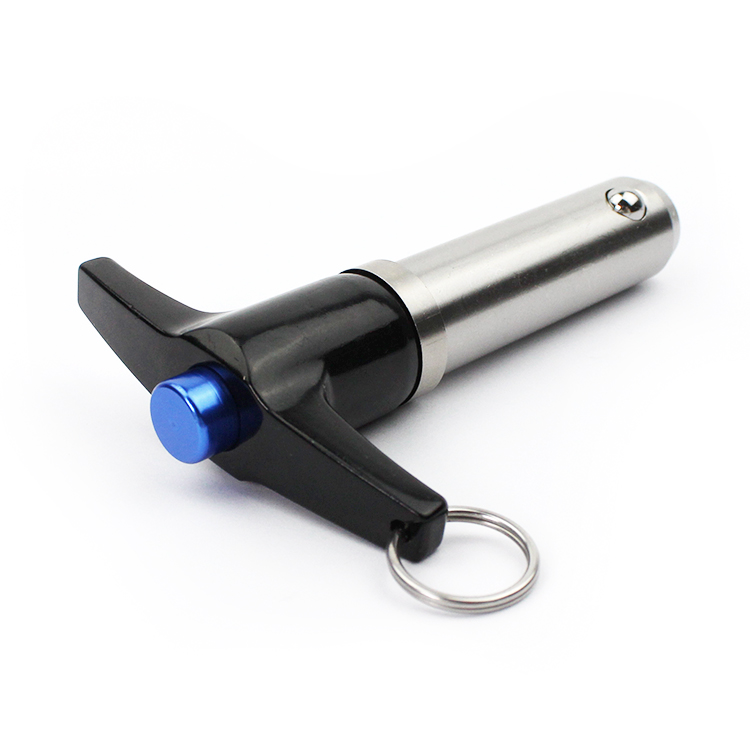
Engineered pins operate very differently inside. Push-button actuation depresses a precision internal spindle. This precise action retracts the small detent balls located near the tip. You can then insert or remove the shank smoothly. Upon releasing the button, the spindle springs back instantly. It forces the balls outward. They lock the pin securely against the receiver wall.
The strengths are undeniable for complex assemblies. You get instantaneous engagement and disengagement. They provide a failsafe positive lock every single time. They are highly repeatable without experiencing material degradation. You can cycle them thousands of times safely without wear.
Vulnerabilities do exist in harsh environments. The moving internal parts are susceptible to jamming. Heavy contamination from dust or metal shavings causes internal friction. You must implement proper sealing or basic maintenance protocols. A quick spray of dry lubricant usually resolves minor sticking issues.
Engineers must evaluate four specific dimensions before approving a fastener specification. Overlooking these variables guarantees premature hardware failure.
You must differentiate between holding objects in place and bearing actual weight. Tension refers to pulling forces along the pin axis. Shear refers to sliding forces trying to cut the pin in half. Engineered pins offer certified shear strength ratings. Standard wire pins rarely provide reliable engineering strength data. You require certified ratings for critical load-bearing applications. Rigging systems and heavy lifting fixtures demand proven shear resistance. We strongly recommend verifying the manufacturer's load data before any structural installation.
Your operational environment dictates proper material selection strictly. Moisture, harsh chemicals, and salt spray destroy basic carbon steel fast. A quick release ball lock pin stainless steel variant prevents catastrophic rust. Manufacturers typically utilize 17-4 precipitation-hardened or 300-series stainless alloys. These premium grades prevent galvanic corrosion and mechanical seizing. Marine environments, aerospace vehicles, and chemical plants require them absolutely. Using basic steel components here guarantees rapid failure. We often see stainless steel ball lock pins specified as mandatory hardware in coastal facility guidelines.
You should evaluate the user interface closely. Operators frequently wear heavy protective gloves. They often work in dark or tight spaces. A tiny push-button slows them down significantly. Specifying a handle quick release ball lock pin solves this ergonomic problem immediately. You can choose T-handle, L-handle, or large ring handle designs. This thoughtful selection reduces physical fatigue. It minimizes operational friction during rapid mechanical changeovers. A robust handle gives workers a solid grip for quick extraction.
Heavy machinery and aerospace sectors mandate strict compliance protocols. Dropped fasteners cause severe damage to turbine blades and delicate internal gears. You must address FOD risks proactively on the factory floor. A rogue cotter pin can destroy expensive equipment. Incorporating a quick release ball lock pin with lanyard ensures the fastener remains attached securely. The lanyard tethers the pin to the main equipment frame permanently. It is never dropped into sensitive machinery. Your field technicians will never lose a critical pin in tall grass or dark corners. The lanyard cable typically features a tough nylon coating to prevent scratches.
Deploying new hardware reveals practical field challenges. You must prepare your team for real-world mechanical realities to ensure success.
We must address common engineering failures honestly. Standard pins frequently vibrate loose in dynamic assemblies. Automated welding jigs, spinning lathe chucks, and vehicle towing hitches generate intense harmonic frequencies. These constant vibrations overcome passive spring tension easily. A standard lynch pin will literally rattle itself open during a long production run. We see this failure mode constantly in agricultural equipment. Positive locking mechanisms stay engaged regardless of the frequency. The detent balls physically block accidental extraction. The internal spring keeps the spindle locked down tight. Your heavy equipment stays together reliably.
You must acknowledge technical installation requirements. Ball lock pins require precision-drilled receiver holes. You cannot just drill a rough hole and hope it works. If the hole tolerance is too loose, the shear load transfers unevenly. This bends the pin shaft severely over time. If the hole is too tight, the pin jams during manual insertion. You should ream your receiver holes to exact engineering specifications. A light application of dry lubricant keeps the internal spindle operating smoothly. Routine inspections prevent unexpected jamming.
Upgrading hardware involves a distinct learning curve for the workforce. Engineered pins operate much faster than traditional cotter pins. However, operators must receive proper training immediately. They need to ensure the detent balls fully clear the receiver wall. They must learn to visually confirm a positive lock before operating machinery. They should push the button fully before attempting extraction. Forcing the pin aggressively damages the locking balls. Brief hands-on training sessions eliminate these user errors quickly. Clear operating procedures ensure maximum component lifespan.
You need clear rules for making purchasing decisions. We developed this matrix to guide your hardware specification process effectively.
We recommend standard options for very specific, limited scenarios. Use them for temporary securing during initial product assembly. They fit perfectly for low-cycle static loads where nothing moves. Highly cost-sensitive disposable assemblies benefit from their basic design. If the assembly ships to a consumer who never adjusts it, keep it simple. They work well for lightweight alignment tasks. Avoid them for overhead lifting or dynamic motion paths.
Standardized positive locking pins fit many common industrial applications. We see them frequently in fixturing tables and rapid prototyping labs. Commercial gym equipment uses them extensively for quick weight adjustments. Stage rigging crews and marine fittings rely on them heavily for safety. Your action step is straightforward here. Match the required grip length to your existing mounting plates. Verify the pin diameter matches your drilled holes. Select a handle type fitting your worker's ergonomic needs perfectly.
Off-the-shelf items do not solve every unique engineering challenge. Proprietary OEM equipment often dictates non-standard dimensions. You might need unique grip lengths for specialized armor plating. High-temperature environments demand specialized internal spring tensions. Sometimes you need bespoke handle configurations for robotic grippers. A custom ball lock pin becomes your only viable option. Partner closely with a trusted manufacturing expert. They must be capable of rapid prototyping. They must supply fully certified load-testing documentation for your compliance records.
Feature Dimension | Traditional Fasteners | Positive Locking Alternatives |
|---|---|---|
Locking Mechanism | Passive (spring tension / bending) | Active (button-actuated detent balls) |
Vibration Resistance | Low (prone to rattling loose) | High (mechanically secured) |
Changeover Speed | Slow (requires tools or manual force) | Instantaneous (push-button release) |
Load Certification | Rarely tested for shear strength | Fully rated and documented |
Component Complexity | Single solid piece or bent wire | Internal spindle, spring, and detent balls |
Below are the standard steps to specify your ideal engineered fastener accurately:
Measure the exact material thickness you need to clamp together.
Identify the maximum expected shear forces acting on the mechanical joint.
Determine the environmental exposure variables, including water, dust, and extreme heat.
Select the appropriate handle style based on operator gear and clearance.
Our final verdict relies on a clear engineering logic. Standard pins offer basic mechanical simplicity and low upfront parts pricing. However, ball lock pins win decisively on process efficiency and risk mitigation. You cannot afford accidental uncoupling in high-stakes operational environments. The long-term performance benefits vastly outweigh the initial specification efforts. Your assemblies remain secure under heavy vibration.
You should take immediate next steps to improve your facility's safety. Advise your buyers and engineers to audit current fastening cycle times. Document your failure rates and downtime incidents to justify the hardware upgrade properly. Start by accurately measuring your required grip lengths. Calculate your strict shear load requirements carefully. Consult with an expert manufacturer to test prototypes in your active production line. This methodical approach guarantees a safer, faster, and more robust operational environment for your entire team.
A: Yes, they handle shear forces exceptionally well. High-quality engineered pins feature solid shank construction. They carry specific, certified shear strength ratings. While a threaded bolt provides higher clamping force (tension), a ball lock pin equals or exceeds standard bolts in pure shear resistance.
A: You must measure the precise distance passing through your mating parts. The true grip length is measured from the bottom surface of the handle down to the top edge of the extended detent balls. Do not measure the entire shaft. The detent balls must clear the exit hole completely.
A: It depends on the specific alloy used. Pins manufactured from 300-series stainless steel are generally non-magnetic and offer maximum corrosion resistance. Conversely, pins made from 17-4 PH stainless steel are magnetic. They provide much higher shear strength but slightly lower corrosion resistance than the 300-series.
A: Single-acting pins require you to push the button to release the locking balls for both insertion and removal. Double-acting pins operate differently. You can release the locking mechanism by either pushing or pulling the handle. This provides faster extraction in emergency scenarios or heavy-duty pulling applications.