Views: 0 Author: Site Editor Publish Time: 2026-06-03 Origin: Site
Hardware often makes up less than 1% of an assembly’s total production budget. Yet, these small components cause roughly 70% of structural failures when incorrectly specified. This glaring imbalance makes hardware selection a critical engineering priority for any project. In the general industry, reliable standard fasteners play a truly foundational role. They expertly balance necessary cost-efficiency with highly predictable mechanical performance. However, choosing the wrong bolt or nut can easily lead to catastrophic joint failure. Such failures create severe safety risks and halt operations.
This guide provides a robust technical evaluation framework. It effectively bridges the gap between strict engineering requirements and everyday procurement realities. You will soon learn how to analyze specific load types, select appropriate materials, and properly navigate complex dimensional standards. Following these guidelines ensures long-term joint stability and mitigates mechanical risks.
Load and Environment Dictate Selection: Shear/tensile loads and corrosive environments are the primary filters for fastener specification.
Material Matching Prevents Failure: Incorrect pairing of bolts, nuts, and washers leads to galvanic corrosion or thread galling.
Compliance Ensures Reliability: Adhering to DIN, ISO, and ASTM standards guarantees interchangeability and verifiable load capacities.
Total Cost Includes Maintenance: Factoring in reusability, anti-vibration needs, and lifecycle longevity is more cost-effective than optimizing for piece-price.
Engineering robust joints requires proactive risk assessment. Procurement teams and engineers must first identify the exact conditions triggering joint failure. You cannot rely on guesswork. Selecting standard fasteners demands a thorough understanding of mechanical forces and environmental stressors.
Mechanical joints face different types of directional forces. You must classify these forces to specify the correct hardware. Tension and shear represent the two primary load categories.
Tensile Loads: These forces pull the joint apart along the axis of the bolt. A crane hoist hanging vertically experiences massive tensile stress. Fasteners resisting tensile loads must possess high yield strength to avoid stretching permanently.
Shear Loads: These forces slide across the joint perpendicularly. Two overlapping steel plates sliding in opposite directions create shear stress. Hardware handling shear loads often requires smooth, unthreaded shanks across the shear plane to prevent fracture.
Atmospheric conditions degrade metal over time. You must evaluate the operating environment before choosing materials or protective coatings. Failing to account for environmental exposure invites rapid structural deterioration.
Chemical exposure destroys standard carbon steel quickly. Corrosive agents like chlorides or acidic fumes require specialized alloys. Extreme temperatures also alter mechanical properties. High heat reduces tensile strength, while freezing temperatures make carbon steel brittle. Moisture remains the most common threat. High-humidity environments demand robust anti-corrosion barriers to prevent rust expansion.
Static loads rarely loosen joints. Dynamic forces and transverse vibration destroy clamp load rapidly. Heavy machinery in the general industry generates constant micromovements. These movements overcome thread friction, causing self-loosening.
Standard hex nuts cannot resist severe vibration. Designers must implement specialized locking mechanisms to combat dynamic forces. Nylon-insert lock nuts, all-metal deformed threads, or tension-maintaining washers become mandatory in vibrating assemblies. Anticipating vibration prevents catastrophic uncoupling during machine operation.
Understanding functional differences between core hardware types speeds up the selection process. You must apply decision-stage criteria to determine when to use specific components. Each hardware category serves a distinct mechanical purpose.
Many technicians use these terms interchangeably. However, strict engineering definitions separate them based on application geometry. Bolts require a mating nut to secure two unthreaded components. They handle much higher shear forces because they clamp materials between the head and the nut.
Screws operate differently. They tap into existing internal threads or create their own threads inside the base material. The primary decision logic centers on hole design. Use bolts for clear, unthreaded through-holes. Specify screws for blind holes where nut placement remains impossible.
Nuts anchor the bolt and maintain vital clamp load. Standard hex nuts work perfectly for static applications lacking vibration. However, they fail rapidly in dynamic environments.
Lock nuts prevent self-loosening. Nylon-insert lock nuts (Nylocs) use a polymer ring to grip the mating threads tightly. They offer excellent vibration resistance but degrade at high temperatures. All-metal lock nuts feature distorted final threads. They handle extreme heat and aggressive chemicals easily. Your expected maintenance frequency and operating temperature dictate which style to deploy.
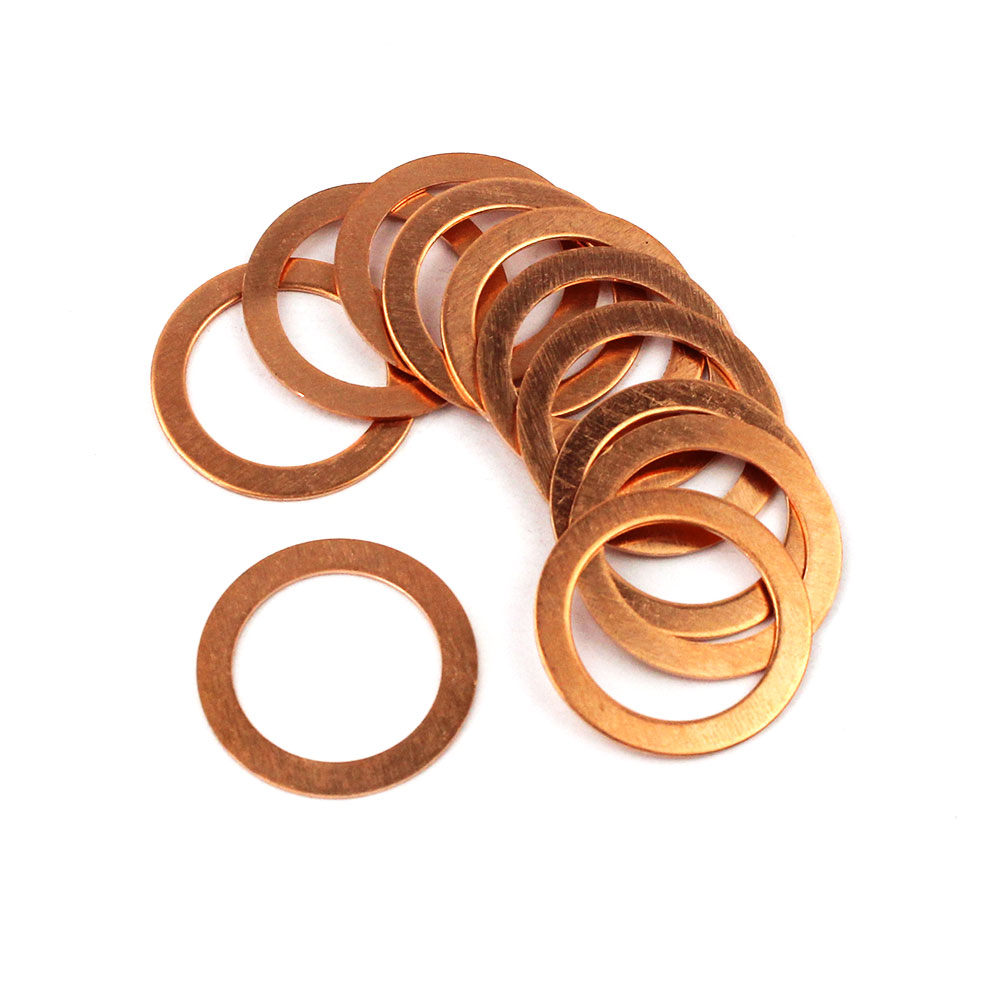
Washers perform two critical tasks. They distribute compressive loads across a wider surface area and maintain joint tension. Flat washers prevent the bolt head from crushing softer base materials.
Locking and spring washers serve a different function. They act as compressed springs, maintaining tension even if slight settling occurs. Omitting washers presents a massive implementation risk. Hardware heads can embed into the substrate. This material embedment eliminates the bolt's stretch, immediately resulting in total loss of clamp load.
No perfect material exists. Every metal and coating involves engineering trade-offs. You must evaluate strength, corrosion resistance, and unit pricing skeptically. Relying on evidence-based material science prevents premature structural degradation.
Engineers primarily rely on three metal categories. Each offers specific mechanical advantages and inherent vulnerabilities.
Carbon & Alloy Steel: This remains the undisputed workhorse. Alloy steel provides a remarkably high strength-to-cost ratio. It excels in dry, heavy-load applications. However, bare carbon steel rusts almost immediately in moist environments. It strictly requires secondary protective treatments.
Stainless Steel (304 vs. 316): Stainless alloys offer exceptional baseline corrosion resistance due to their chromium content. Grade 316 includes molybdenum, making it highly resistant to marine chlorides. However, buyers often forget a critical trade-off. Standard stainless steel possesses significantly lower tensile strength than heat-treated alloy steel. Furthermore, friction during installation often causes thread galling. This cold-welding phenomenon seizes the nut permanently.
Specialty Metals (e.g., Titanium): Titanium delivers an unmatched strength-to-weight ratio. It shrugs off extreme chemical attacks effortlessly. Unfortunately, prohibitive manufacturing costs limit its use. Procurement teams usually reserve titanium for critical aerospace applications or medical-grade equipment.
Table 1: Material Comparison Chart | |||
Material Type | Tensile Strength | Corrosion Resistance | Common Application Risk |
|---|---|---|---|
Carbon/Alloy Steel | Very High | Poor (Requires Coating) | Rapid rusting in moisture |
304 Stainless Steel | Moderate | Good | Thread galling during assembly |
316 Stainless Steel | Moderate | Excellent (Chloride resistant) | High cost compared to carbon steel |
Titanium | High | Exceptional | Prohibitive piece-price |
If you select carbon steel, you must specify an appropriate surface treatment. Zinc plating offers a thin, inexpensive sacrificial barrier. It suits indoor environments or moderate outdoor exposure perfectly.
Hot-Dip Galvanizing (HDG) provides a much thicker, durable zinc layer. HDG survives harsh outdoor elements for decades. However, the thick coating alters thread geometry. You must specify overtapped nuts to accommodate HDG bolts. Finally, PTFE (Teflon) coatings offer extreme chemical resistance and low installation friction, making them ideal for petrochemical pipelines.
Procurement teams cannot rely on generic hardware descriptions. Verifiable dimensional and performance standards ensure absolute supply chain resilience. They guarantee global interoperability and predictable mechanical yields.
Standards bodies like ISO (International Organization for Standardization), DIN (Deutsches Institut für Normung), and ASTM (American Society for Testing and Materials) dictate exact manufacturing tolerances. When you order an ISO 4014 hex bolt, you receive identical dimensions regardless of the manufacturer. This strict uniformity allows engineers to calculate exact stress limits safely.
Bolt heads feature stamped markings indicating their ultimate strength. You must learn to decode these symbols quickly.
Metric fasteners use a two-number class system (e.g., 8.8, 10.9, 12.9). The first digit represents ultimate tensile strength in hundreds of megapascals (MPa). An 8.8 bolt has an 800 MPa tensile strength. The second digit indicates the yield-to-tensile ratio. The .8 means the bolt yields at 80% of its ultimate strength (640 MPa). Imperial fasteners utilize a radial line system. Grade 5 bolts display three radial lines, while Grade 8 bolts display six lines, indicating higher carbon alloy content and superior strength.
Counterfeit hardware plagues the global supply chain. Substandard metals masquerading as high-grade alloys cause disastrous accidents. Procurement departments must strictly require Material Test Reports (MTRs) for any critical load-bearing application.
MTRs verify exact chemical composition and physical testing results. They trace the component back to the original steel mill. Maintaining this rigorous traceability eliminates the risk of deploying fragile, non-compliant hardware into high-stress environments.
Evaluating thousands of hardware options requires a disciplined, step-by-step approach. Engineers and buyers should utilize this actionable decision flow to specify the correct components confidently.
Define the Clamp Load: Calculate the exact tension required to keep the joint completely secure. A general engineering rule suggests targeting 75% to 80% of the bolt's proof load. Exceeding the yield strength causes permanent plastic deformation.
Match the System Components: Never mix incompatible grades randomly. Always match the material grade of the nut to the bolt. Actually, engineering best practices recommend selecting a nut slightly stronger than the bolt. This ensures the bolt stretches or fails before the internal nut threads strip out entirely. Stripped threads often hide inside the assembly invisibly.
Evaluate Reusability Needs: Determine how often maintenance crews will disassemble the joint. Frequent maintenance favors standard hex configurations paired with robust thread lubricants. Conversely, permanent installations benefit from liquid threadlockers or deformed-thread locknuts.
Factor in Maintenance and Extraction Risks: Weigh the initial upfront material price against future downtime hazards. Extracting heavily rusted hardware requires torches, cutting wheels, and hours of labor. Investing in premium alloys or thicker protective coatings prevents these severe maintenance delays later.
Specifying standard fasteners requires strict technical discipline. You must aggressively balance mechanical loads, harsh environmental realities, and rigorous standard compliance. A small sizing error or incorrect material choice compromises the entire assembly. Relying on verified ISO and ASTM specifications guarantees predictable joint behavior.
Always review technical data sheets carefully before finalizing bulk orders. Request physical samples to conduct real-world torque-tension testing. If standard catalog items cannot survive your specific environmental tests, collaborate with engineers to develop a specialized custom service solution. Validating load ratings early prevents catastrophic field failures and costly operational delays.
A: The primary difference lies in yield strength and metallurgical composition. Grade 5 bolts utilize medium carbon steel and offer roughly 120,000 psi tensile strength. Grade 8 bolts use medium carbon alloy steel. They undergo stricter heat treatment to achieve 150,000 psi tensile strength, making them suitable for extreme mechanical loads.
A: Thread galling occurs due to rapid friction melting the oxide layer. You prevent it by applying quality anti-seize lubricants before assembly. Furthermore, you must slow down your installation speeds significantly. Avoid using high-speed pneumatic power tools during initial threading to minimize friction-induced heat generation.
A: We strongly advise against mixing them. Metric and imperial hardware feature entirely different thread pitches and thread angles. Forcing a metric nut onto an imperial bolt compromises the intended clamp load immediately. This mismatch destroys the internal threads and creates a highly dangerous, unpredictable mechanical joint.
A: Use split lock washers for assemblies facing moderate vibration or when you need minimal surface protection. They offer basic tension maintenance. However, you must use engineered lock nuts (like nylon-insert or deformed-thread models) for severe, continuous dynamic loads. Lock nuts actively resist transverse vibration much better than spring washers.