Views: 0 Author: Site Editor Publish Time: 2026-06-29 Origin: Site
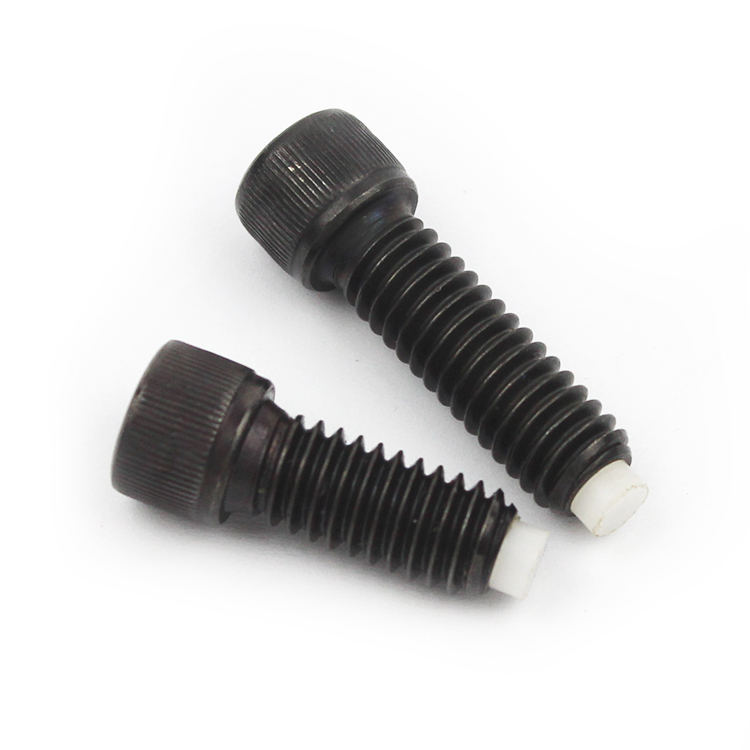
Securing expensive or delicate components requires precision fastening. You need hardware preventing surface marring, galling, or permanent damage. For engineers, optical technicians, and procurement teams, selecting the right fastener isn't just about thread size. It is fundamentally about material interaction. A standard metal fastener might secure a load perfectly but often destroys the underlying finish during engagement. This creates costly rework and compromises system integrity. This guide deconstructs the structural advantages, standard configurations, and procurement criteria for utilizing a thumb screw nylon tip in precision assemblies. You will learn how these specialized components distribute clamping force effectively. We explore specific head styles, metric sizing options, and fundamental material behaviors. By understanding these core variables, you can confidently integrate these non-marring fasteners into highly sensitive mechanical systems.
Damage Prevention: Nylon tips provide a non-marring compressive interface, ideal for clamping against soft metals, glass, or polished surfaces without compromising holding force.
Thread & Sizing: The M4 nylon tip thumb screw is the industry standard for optical mounts, laboratory instrumentation, and compact mechanical assemblies.
Head Style Dictates Torque: Knurled heads maximize manual grip and torque application, while round or low-profile heads prevent over-tightening in space-constrained or sensitive applications.
Procurement Focus: Sourcing decisions must weigh thread material (stainless vs. alloy), nylon temperature limits, and batch tolerance consistency.
Metal-on-metal clamping inherently causes surface scratching. It can trigger localized deformation. Over time, friction generates particulate shedding. This contamination is entirely unacceptable in cleanrooms. Optics and high-finish consumer products also demand pristine surfaces. The nylon tip solution addresses these issues directly. The plastic insert acts as a sacrificial, compressible buffer. It conforms slightly to the mated surface upon contact. This action distributes the clamping load far more evenly. A standard flat metallic point concentrates stress. The softer tip spreads force safely across the target area.
Additionally, the polymer insert provides mild vibration dampening. This reduces the risk of fasteners backing out under dynamic loads. You achieve reliable positioning through repeated use. Consider the fundamental physics at play during installation. Hardened steel engaging against soft aluminum creates immediate gouges. Engineers refer to this as galling. Integrating a polymer barrier prevents this destructive transfer of kinetic energy. The plastic undergoes elastic deformation. It compresses under load but returns to its original shape upon release.
Common deployment scenarios include:
Securing glass lenses inside optical structural tubes.
Clamping fragile plates in laboratory testing jigs.
Locking sliding aluminum rails on camera rigs safely.
Adjusting medical device calibration dials smoothly.
What defines success here? A successful deployment yields secure positioning immediately. It leaves zero visible surface degradation after repeated engagement and disengagement cycles. You protect sensitive equipment effortlessly.
Why does M4 matter? The metric M4 thread dominates precision equipment design. It perfectly balances thread strength against a highly compact form factor. Engineers rely on the M4 nylon tip thumb screw for delicate sensor mounts. Standard M4x0.7mm pitch requirements demand strict adherence. You must specify tight thread class tolerances. Typically, a 6g thread tolerance prevents lateral play during manual adjustment.
Total length versus thread length significantly impacts performance. Total extension of the nylon tip determines your allowable clamping depth. If the nylon protrudes too far, lateral shear forces might dislodge it. Material interactions require careful planning. The screw body material pairs dynamically with the receiving hole. Using 300-series stainless steel prevents rust. Brass or aluminum bodies offer distinct weight advantages. Always match these materials properly.
Poor pairing invites galvanic corrosion in humid environments. The anodic index dictates which metals react negatively. You must avoid placing dissimilar metals together in marine settings.
Standard Metric Thread Characteristics | |||
Thread Specification | Standard Pitch | Typical Clearance Hole | Common Core Materials |
|---|---|---|---|
M3 Metric | 0.50 mm | 3.40 mm | Brass, Stainless Steel |
M4 Metric | 0.70 mm | 4.50 mm | Aluminum, 316 Stainless |
M5 Metric | 0.80 mm | 5.50 mm | Alloy Steel, Brass |
Knurled head configurations feature distinct textures. You will find diamond or straight-cut ridges along the outer diameter. Manufacturers create these patterns via cold rolling processes. This design allows maximum manual grip. It proves extremely useful for frequent adjustments. Technicians use them in the field or lab. Common applications include telescope mounts and sliding brackets. However, a major caveat exists. High grip increases the risk of manual over-tightening. Operators must receive proper training. Otherwise, they might crush the internal plastic insert permanently.
Round or smooth head configurations offer a different approach. They feature a smooth cylindrical or domed profile. Engineers design them specifically for minimal clearance environments. They look aesthetically discreet. More importantly, they provide a built-in safety factor. The smooth surface naturally limits manual torque. A user can only apply so much rotational force before their fingers slip. This protects the nylon tip from crushing against the mating surface.
We must clarify a common hybrid distinction. Buyers frequently confuse similar terms during procurement. A "nylon tipped" screw uses a metal body and a plastic point. A "plastic headed" screw uses a metal thread and a plastic grip. You must specify the exact configuration needed for your assembly.
Comparison Chart: Knurled vs. Round Head Styles | ||
Feature Category | Knurled Head Profile | Round Head Profile |
|---|---|---|
Grip Texture | Diamond or straight machined ridges | Smooth, polished cylindrical surface |
Torque Application | High manual torque capability | Low, self-limiting manual torque |
Primary Advantage | Easy adjustment using gloved hands | Prevents accidental over-compression |
Space Requirement | Requires ample finger clearance | Ideal for tight or recessed spaces |
Sourcing hardware requires rigorous material verification. You should look for certified Nylon 6/6 tips. This specific grade ensures optimal wear resistance. It also guarantees high chemical inertness against laboratory solvents. Nylon possesses hygroscopic properties. It absorbs moisture from humid environments. This absorption slightly alters its dimensional profile. You must account for this swelling in high-humidity applications.
Environmental limitations remain a crucial factor. Highlight the thermal constraints of nylon immediately. You face severe deformation risks above 85°C (185°F). We strongly advise against use in high-temperature vacuum environments. The polymer will outgas and degrade rapidly.
Batch consistency matters heavily for OEM manufacturing. You must emphasize the necessity of strict tolerances. How far does the tip protrude from the metal thread? This measurement must remain identical across batches. Consistent protrusion prevents inconsistent clamping distances on assembly lines. Finally, consider regulatory compliance. When procuring a thumb screw nylon tip for specialized sectors, verify standard RoHS and REACH compliance requirements. Components used in consumer or medical devices mandate these certifications strictly. Ensure your supplier provides full material documentation.
Installation risks demand proactive management. Repeated over-torquing will eventually flatten the nylon tip. It can also shear the plastic insert completely from the metal shank. When this happens, you must replace the part entirely. Thread stripping poses another significant danger. You risk cross-threading fine metric threads if alignment is poor. Always start threading manually to ensure proper engagement before applying force.
Follow this shortlisting logic to refine your choice:
Audit the mating surface material carefully. Ask yourself if a plastic interface is strictly necessary. Sometimes brass or Delrin inserts perform better under specific heavy loads.
Define your spatial and torque requirements accurately. Use this data to select between knurled versus round heads effectively.
Determine the operational environment clearly. Check ambient temperatures and potential chemical exposure limits daily.
Next actions drive successful procurement. Request standard CAD models in STEP or IGES formats. Use these files for digital assembly verification inside your 3D software. Order small-batch samples for physical torque testing on the actual production floor. Evaluate how the plastic insert behaves after fifty cycles. Finally, consult your distributor regarding RFQ tiers. Volume pricing often dictates the final sourcing decision for large-scale manufacturing runs.
Choosing the right fastener is a critical micro-decision. This simple choice protects macro-investments in expensive equipment. It preserves delicate product finishes permanently. An M4 metric variant provides the perfect structural balance. Selecting the appropriate head style guarantees safe manual adjustment. It ensures reliable, repeatable, and non-destructive clamping. Precision applications demand this exact level of predictability.
Key considerations for final implementation:
Standardize your metric sizing across the entire assembly.
Train technicians on maximum manual torque thresholds.
Establish routine inspection intervals for tip deformation.
Final Verdict: An M4 nylon tip thumb screw ensures reliable, repeatable, and non-destructive clamping for precision applications. You safeguard your mechanical assemblies while maintaining ultimate operational flexibility.
A: Specific torque limits depend entirely on tip diameter and the specific polymer grade. Manufacturers design these fasteners strictly for hand-tightening. Applying excessive mechanical torque using pliers or wrenches will permanently crush the tip. Always consult the manufacturer specification sheet for exact yield limits.
A: You cannot replace the plastic insert independently. Factories typically press-fit the tips directly into the metal screw body during manufacturing. Once the polymer becomes flattened or deformed, you must replace the entire unit. This guarantees structural holding integrity and prevents loose components.
A: The compressible polymer provides slight dampening properties naturally. However, extreme dynamic vibrations may still overcome manual tightening friction. Depending on the application, you might require secondary locking mechanisms. Consider using thread-locking fluid or low-profile lock nuts to secure the assembly permanently.