Views: 0 Author: Site Editor Publish Time: 2026-10-23 Origin: Site
Picture this. You are deep into a complex centrifugal pump overhaul. Your hands are covered in industrial grease. Suddenly, you are stopped dead in your tracks by a tiny, headless fastener that refuses to budge. There is nothing quite as frustrating as being in the middle of a critical machinery repair, only to find your hex key spinning uselessly inside a ruined drive. Because these fasteners are often small and countersunk flush into the surrounding metal, getting a solid grip on them feels entirely impossible.
Whether you are dealing with a stubborn grub screw on an industrial lathe shaft, a rusted piece of hardware on a high-pressure valve, or a delicate micro-fastener on precision equipment, this guide will walk you through the most effective extraction methods. I have spent years on the engineering frontline battling seized hardware. We will begin with simple, non-invasive tricks before moving up to professional extraction techniques. This ensures you can remove that stuck fastener without permanently damaging your valuable equipment.
Assess the Damage First: Mildly deformed drives can often be coaxed out with simple items like a thick rubber band. Severely rounded ones demand specialized extraction tools.
The Star Bit Hack is a Lifesaver: Hammering a slightly oversized star-shaped bit into a rounded hole is frequently the fastest solution for gaining new purchase.
Heat and Penetrating Oil are Essential: Rust, galvanic corrosion, and anaerobic thread-locking fluids are common culprits. Breaking their chemical bond is absolutely crucial before applying heavy torque.
Replacement Quality Matters: Once successfully extracted, never reuse a compromised fastener. Upgrading to premium alloys ensures long-term durability.
The primary culprit behind a ruined drive is often the tool itself. Utilizing standard imperial wrenches on metric hardware creates a loose fit. This inevitably shaves away the soft inner corners of the metal. Furthermore, repeatedly using cheap, rounded-off hex keys drastically increases the likelihood of destroying a Hex Socket Set Screw. Precision machinery requires precision tools.
In practice, many technicians apply excessive torque in an attempt to secure a component. This inadvertently deforms the relatively soft metal of standard fasteners. When threads are crossed during the initial installation, the resulting mechanical bind makes future removal exceedingly difficult.
When dissimilar metals remain in prolonged contact, a chemical reaction occurs. This is especially true in environments where moisture or harsh industrial fluids are present. This galvanic corrosion essentially welds the fastener to the internal threads, causing it to seize completely.
Recent industry analyses regarding machinery failure and maintenance efficiency reveal a notable shift in manufacturing paradigms. As automated assembly lines and heavy-duty industrial equipment demand increasingly higher torque thresholds, the prevalence of stripped fasteners has pushed the sector toward precision-engineered, corrosion-resistant materials. Experts note a rapidly declining reliance on standard carbon steel. Instead, the market is favoring advanced metallurgical alloys and proprietary anti-seize coatings. This broader evolution not only minimizes the costly downtime associated with grueling extraction processes. It also significantly extends the operational lifespan of critical mechanical components across various demanding sectors.
Before rushing to the supply crib, check your workbench. Wide rubber bands, high-strength cyanoacrylate adhesive, narrow flathead screwdrivers, and a lightweight ball-peen hammer can often resolve minor issues without specialized gear.
For more severe cases, you will need a dedicated arsenal. Spiral-fluted screw extractor kits, left-handed cobalt drill bits, and a comprehensive set of hardened star bits are indispensable for professional-grade extraction.
Specifically, premium penetrating oils are vital for cutting through deep-seated rust. In addition, valve grinding compound can provide much-needed friction for slipping tools. An industrial heat gun or a butane micro-torch is necessary for melting stubborn thread-locking adhesives.
If the socket is only slightly rounded, place a section of a wide, flat rubber band directly over the hole. Push your hex key firmly into the socket through the rubber. The elastic material fills the microscopic gaps between the tool and the damaged walls. This provides just enough grip to back out a low-torque fastener.
Conversely, if the rubber band is too bulky, apply a tiny dab of abrasive paste directly to the tip of your tool. Valve grinding compound or specialized friction drops work exceptionally well. The abrasive grit bites into the remaining metal, significantly reducing slippage as you turn.
For low-torque applications where tools simply will not catch, consider sacrificing a cheap hex key. Apply a minuscule drop of fast-setting epoxy to the tip of the wrench and insert it into the socket. Allow it to cure completely before gently twisting. Caution is paramount here. If the adhesive spills over into the surrounding threads, you will permanently lock the hardware in place.
When a hexagonal drive is completely rounded out, a standard hex key has nothing left to push against. In contrast, the sharp points of a star-shaped bit are uniquely designed to bite into circular walls. They cut fresh grooves and create an entirely new mechanical grip.
First, select a star bit that is just marginally larger than the ruined hexagonal hole. It should not slip in easily. Next, align the bit perfectly straight and tap it firmly into the recess using a hammer. Ensure the steel flutes carve deeply into the softer fastener material. Finally, attach your driver handle, apply heavy downward pressure to prevent cam-out, and turn slowly counterclockwise.
This method is ideal for deeply recessed, heavily seized, or catastrophically stripped hardware that simple hacks cannot budge. It requires patience and a steady hand to execute correctly.
Begin by selecting the appropriate drill bit size dictated by your extractor kit. Carefully drill directly into the dead center of the socket. Maintaining a perfectly straight angle is critical to avoid chewing into the valuable internal threads of your equipment. Drilling into hardened alloys requires a premium cobalt drill bit and generous application of cutting fluid to prevent overheating.
Once the pilot hole is established, insert the reverse-threaded extraction tool. Tap it lightly to seat it, then attach a tap wrench. As you turn the tool counterclockwise, the reverse threads will dig deeper into the metal. They will bind tightly enough to force the entire fastener to unscrew.
Need a quick reference guide? Here is a breakdown of extraction methods based on frontline engineering experience.
Extraction Method | Torx/Torque Level | Risk of Thread Damage | Best Use Case |
|---|---|---|---|
Rubber Band Hack | Low | Minimal | Slightly rounded sockets with no rust. |
Star Bit Method | Medium | Low | Completely rounded internal hex drives. |
Spiral Extractor | High | Medium | Deeply seized or severely rusted hardware. |
Rotary Tool Slot | Medium | High | Protruding screws with clear horizontal access. |
If you suspect the presence of high-strength thread-locking fluid or severe rust welding, mechanical force alone will likely snap your tool. Utilize a butane micro-torch to apply localized heat directly to the area. The science of thermal expansion works in your favor here. The heat breaks down chemical adhesives and causes microscopic shifts between the mated threads, fracturing the rust bond.
Occasionally, a grub screw will protrude slightly above the surface of the material. If you have clearance, use a rotary tool equipped with a thin cut-off wheel. Carve a straight, horizontal slot directly across the top of the fastener. You have now effectively transformed a ruined hex drive into a standard flathead screw. This can then be removed with a heavy-duty flathead screwdriver.
Sometimes, the simple act of drilling can solve the problem. Left-handed drill bits are designed to cut while spinning in reverse. Frequently, the heat and aggressive counterclockwise friction generated during the drilling process will catch the remaining metal. This spins the stubborn piece right out before you even need to reach for an extractor.
Once you finally wrestle a deformed piece of hardware out of your equipment, throw it directly into the trash. Reinserting a compromised fastener is a guaranteed recipe for future disaster. The structural integrity of the metal has already been fatally weakened.
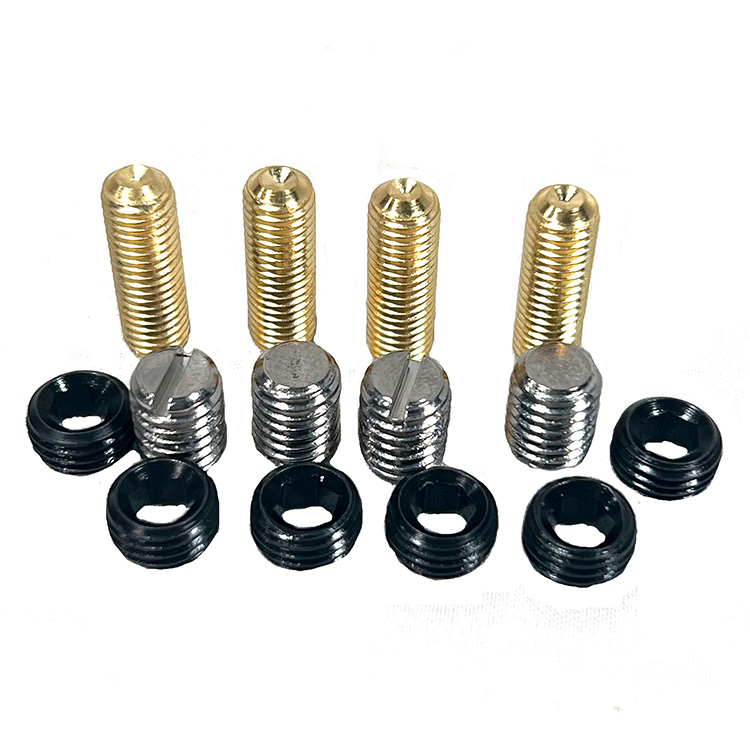
To prevent a recurrence of this frustrating scenario, evaluate the rigorous demands of your application. Upgrading to High Strength Set Screws ensures maximum reliability. For instance, selecting Grade 12.9 alloy steel variants with a black oxide finish guarantees the drive socket can withstand immense torque without deforming. These robust parameters make them ideal for heavy machinery, automotive components, and high-vibration pump environments where standard carbon steel simply fails.
If your equipment is exposed to moisture, harsh chemicals, or outdoor elements, rust is your primary enemy. In these scenarios, replacing your hardware with 304 or 316 grade stainless variants is the most logical preventative measure. While slightly softer than hardened carbon steel, the unparalleled rust resistance prevents the galvanic corrosion that causes seizing in the first place. For ongoing maintenance across various metric sizes ranging from M3 to M8, keeping an Assortment Set Screw kit on hand ensures you never have to compromise by installing the wrong size.
Successfully removing a stripped recessed fastener requires a calculated approach, abundant patience, and a steady hand. By starting with the least invasive methods and only escalating to drills, extractors, or thermal shock when absolutely necessary, you can salvage your equipment without inflicting permanent thread damage. Remember that a ruined drive is almost always a symptom of poor-quality hardware, lack of lubrication, or worn-out tooling. Do your future self a massive favor. Toss the cheap wrenches, invest in quality tools, and replace every extracted piece with premium, high-grade hardware from reliable manufacturers like PDM Industry. This proactive approach ensures your next maintenance task is remarkably effortless.
Yes, but this should only be attempted as a last resort. You can utilize a drill bit that is marginally smaller than the outer diameter of the screw threads to hollow out the core. Then meticulously pick the remaining metal shards out of the internal threads with a scribe. However, this highly invasive method risks permanently damaging the internal threads of your equipment and will likely require you to re-tap the hole to a larger size.
For the vast majority of mechanics, a slightly oversized star bit hammered directly into the ruined hex socket is the fastest and most reliable tool. If the metal is too hard or the hole is too deformed for the star bit to catch, a professional-grade spiral flute screw extractor paired with a left-handed drill bit is the definitive solution.
Stainless steel is highly resistant to rust and environmental corrosion. This actively prevents the fastener from seizing up in the threaded hole over time. However, it is crucial to note that austenitic stainless steel can be physically softer than hardened alloy steel. Therefore, while it prevents rust-induced stripping, it is still imperative to use a precise, high-quality wrench to avoid mechanically rounding out the socket. For maximum resistance against physical deformation under heavy torque, Grade 12.9 hardened alloy variants are strictly recommended.
For micro-hardware, standard heavy-duty extractors are entirely too large and aggressive. First, attempt the epoxy method using a disposable, precisely sized hex key. Alternatively, apply a microscopic drop of valve grinding compound to enhance friction. If mechanical drilling becomes unavoidable, you must use a specialized precision micro-extractor set and a manual pin vise. This maintains absolute control and avoids shattering delicate surrounding components.
Applying heat is highly effective for breaking anaerobic thread-locking fluids, but it must be done with extreme precision. Using a micro-torch allows you to isolate the thermal expansion to the fastener itself. However, excessive heat can warp delicate aluminum housings, melt nearby rubber O-rings, or alter the heat treatment of hardened shafts. Always apply heat in short, controlled bursts and monitor the surrounding surface temperature closely.
Standard spiral-fluted extractors are generally too large and apply too much outward radial pressure for fasteners as small as M3. When dealing with metric sizes under M4, inserting a standard extractor often expands the thin walls of the screw, locking it even tighter into the threads. For these miniature applications, using a left-handed micro drill bit or the friction drop method yields a much higher success rate without risking permanent thread expansion.