Views: 0 Author: Site Editor Publish Time: 2026-09-02 Origin: Site
Specifying the wrong material creates hidden operational costs and severe risks in industrial and structural applications. Engineers and procurement teams must balance upfront material premiums against the long-term risk of catastrophic corrosion failure. Over-specifying drains project budgets needlessly, while under-specifying leads to dangerous structural compromises. We must establish a strict evaluation framework to assess environmental exposure and mechanical requirements thoroughly. This determines the exact grade required for specific project parameters. Choosing the right stainless steel fasteners prevents premature joint failures. You secure structural integrity while optimizing your material spend. Whether you are building a coastal facility or assembling indoor machinery, understanding the exact metallurgical limits of your hardware prevents costly downtime. We will break down the exact differences between 304 and 316 grades so you can make informed, field-ready decisions.
Baseline vs. Upgrade: Grade 304 serves as the highly capable baseline for general-purpose corrosion resistance, while 316 is the mandatory upgrade for environments exposed to chlorides, salt, or harsh chemicals.
Mechanical Parity: Both alloys offer nearly identical tensile and yield strength at room temperature; the primary differentiator is chemical resistance, not load-bearing capacity.
Cost Implications: Grade 316 commands a variable price premium over 304, necessitating a strict ROI analysis based on environmental risk rather than default over-specification.
Form Factor Availability: While both grades are widely available as a standard fastener, niche configurations or custom-machined components may require longer lead times depending on the chosen alloy.
Grade 304 dominates the global hardware market for good reason. Field crews often refer to it as 18-8 stainless steel. This shorthand points directly to its core chemical makeup. It contains approximately 18% chromium and 8% nickel. This specific metallic blend creates a passive oxide layer on the surface of the metal. The microscopic layer forms instantly when the raw steel is exposed to oxygen. It acts as an invisible, self-healing shield against rust. If a wrench scratches the bolt head during installation, the exposed chromium reacts with atmospheric oxygen to repair the barrier immediately. This mechanism prevents oxidation in mild environments highly effectively. It handles freshwater exposure flawlessly over decades of service. Standard atmospheric conditions pose absolutely no threat to its structural integrity. You will find 304 as the default choice across many commercial sectors. Indoor manufacturing machinery relies heavily on its stable properties. Standard architectural applications use it for structural framing and bracketry. Automotive interiors utilize it for trim and mounting hardware where moisture exposure remains low. The alloy provides excellent durability without excessive material costs. It balances manufacturing workability with reliable field performance.
Grade 316 represents a critical step up in environmental durability. The chemical composition shares similar chromium and nickel levels with 304. However, it introduces a crucial elemental addition to the melt. The alloy contains 2% to 3% molybdenum. This specific heavy metal transforms the performance profile entirely. Molybdenum specifically resists pitting and crevice corrosion. Chloride ions aggressively attack standard steel structures daily. Saltwater environments destroy unprotected metals rapidly by breaking down the chromium oxide layer. De-icing salts on winter roads cause severe degradation to vehicle undercarriages. Industrial solvents eat through basic alloys without mercy. Molybdenum reinforces the passive oxide layer at a molecular level. It prevents chlorides from penetrating the surface barrier and initiating localized rust pockets. This makes 316 mandatory for harsh, unpredictable environments. You must use it near oceans, inside chemical plants, or in areas with heavy pollution. The upgrade ensures long-term structural safety under intense chemical stress. We measure this capability using the Pitting Resistance Equivalent Number (PREN). Grade 316 scores significantly higher than 304 on this scale, proving its superiority in chloride-rich zones.
Element | Grade 304 Composition (%) | Grade 316 Composition (%) |
|---|---|---|
Chromium (Cr) | 18.0 - 20.0 | 16.0 - 18.0 |
Nickel (Ni) | 8.0 - 10.5 | 10.0 - 14.0 |
Molybdenum (Mo) | N/A | 2.0 - 3.0 |
Carbon (C) | 0.08 max | 0.08 max |
Manganese (Mn) | 2.0 max | 2.0 max |
Both 304 and 316 belong to the austenitic metallurgical family. Austenitic alloys prioritize corrosion resistance over extreme hardness. Their crystalline structure makes them highly ductile and tough. They absorb physical impact well but lack surface hardness. Sometimes, neither grade fits the specific project requirements. Certain applications require cutting threads directly into hard materials. Self-tapping screws need sharp, rigid threads to function properly without deforming. Engineers must pivot away from 304 and 316 entirely in these situations. You should specify a martensitic grade like 410 instead. Martensitic steels undergo intense heat treatment to achieve high carbon hardness. You trade superior corrosion resistance for mechanical cutting ability. Understanding this metallurgical trade-off prevents stripped threads during installation. You match the crystalline structure to the specific mechanical task. Using an austenitic screw to tap hard metal guarantees failure on the job site. The threads will simply roll over and flatten against the harder substrate.
Environmental mapping dictates your material selection process entirely. We rely heavily on the "10-mile rule" as a baseline for field operations. You should specify 316 when operating within 10 miles of a coastline. Airborne sea salt travels surprisingly far inland on wind currents. Coastal humidity accelerates the oxidation process rapidly, even on days without direct saltwater contact. Regions heavily reliant on winter road salts demand similar precautions. Slush and brine accumulate on structural joints underneath vehicles and highway infrastructure. Chemical processing plants require the molybdenum upgrade universally. Wastewater treatment facilities expose hardware to corrosive hydrogen sulfide gases in aeration basins. Medical environments utilize harsh chemical sterilizers daily to maintain hygiene. Grade 304 degrades quickly under these specific chemical conditions. Pitting corrosion creates microscopic stress fractures deep within the thread pitch. These unseen fractures compromise the entire joint assembly over time, leading to sudden shearing under load. You must evaluate the micro-climate surrounding your hardware meticulously.
Map the distance to the nearest saltwater body or coastal inlet.
Identify any airborne industrial pollutants or chemical exhaust vents nearby.
Review the facility's cleaning protocols, specifically looking for bleach or caustic washdowns.
Assess the likelihood of winter road salt exposure for outdoor infrastructure.
Monitor ambient humidity levels and the potential for condensation pooling on joints.
Many engineers misunderstand the strength differences between these two grades. Let us debunk a common industry misconception right now. Grade 316 is not significantly stronger mechanically than 304 at room temperature. Both alloys offer nearly identical tensile strength ratings. Their yield strength parameters align very closely. Hardness levels remain practically indistinguishable in standard applications. You do not upgrade to 316 for load-bearing capacity. You upgrade strictly for chemical survival and longevity. However, temperature tolerance reveals a slight divergence in performance. Grade 316 holds a minor advantage at elevated temperatures. It maintains structural integrity better above 500°C. Creep resistance improves under extreme thermal stress. This matters in high-heat industrial exhaust systems, boiler rooms, and heavy manufacturing furnaces. If your assembly operates at room temperature, base your decision entirely on chemistry, not mechanical load.
Property | Grade 304 | Grade 316 |
|---|---|---|
Tensile Strength (MPa) | ~515 | ~515 |
Yield Strength (MPa) | ~205 | ~205 |
Chloride Resistance | Low to Moderate | Excellent |
High-Temp Creep Resistance | Good | Superior |
Magnetic Permeability | Very Low | Very Low |
Both grades share a frustrating mechanical vulnerability during installation. They are highly susceptible to severe thread galling. Field crews often call this destructive phenomenon cold welding. Friction generates intense localized heat during the tightening process. The protective oxide layer scrapes away under high pressure between the mating threads. Bare metal asperities rub together and fuse instantly. The threads lock up completely and permanently. You cannot tighten or loosen the joint once this happens. Forcing the rotation will shear the bolt head off entirely, leaving the shank stuck in the tapped hole. You must implement strict mitigation strategies on the job site to prevent this.
Enforce proper torque limits during every assembly using calibrated wrenches.
Reduce installation speeds significantly to minimize friction heat.
Avoid using high-speed impact drivers on austenitic alloys entirely.
Apply anti-seize lubricants to the threads before threading the nut.
Utilize PTFE coatings for a clean, dry lubrication alternative in sensitive environments.
Material selection directly impacts your overall project budget. We must analyze the current market delta carefully. The price premium for 316 varies widely across different categories. A standard fastener might only see a moderate markup. Mass production keeps these basic components relatively affordable for large-scale procurement. However, custom CNC-machined components change the math entirely. Specialized structural bolts push the premium much higher due to the increased difficulty of machining molybdenum-enriched steel. Raw material costs fluctuate based on global molybdenum supply chains. Engineering teams frequently fall into the pitfall of over-specification. Real-world manufacturing insights reveal a common, costly trend. Clients over-spec 316 for indoor CNC parts constantly. Grade 304 would perform flawlessly in these dry, climate-controlled environments. This habit needlessly inflates project budgets without adding any tangible value to the final product. You must align the material grade with actual environmental threats to optimize your spend.
You need a solid framework for calculating long-term value. Do not look solely at the upfront material invoice. Consider the upfront cost plus the installation labor. Add routine maintenance expenses to the equation. Factor in potential failure and catastrophic replacement costs. Let us examine two distinct operational scenarios. Scenario A involves a climate-controlled indoor facility manufacturing electronics. Specifying 316 here represents pure financial waste. The environment lacks the chlorides needed to justify the upgrade. Scenario B involves a marine dock or a chemical processing environment. Under-specifying 304 here creates severe catastrophic liability. The hardware will rust, pit, and eventually fail entirely under load. Downtime costs will dwarf the initial material savings rapidly. Extracting seized, rusted bolts requires expensive manual labor, drilling, and re-tapping. You mitigate risk by spending more only where chemistry demands it. Smart procurement focuses on the lifecycle of the joint, not just the purchase order.
Heavy machinery requires secure, high-torque structural connections. Engine bays, hydraulic presses, and structural joints demand precise tensioning to prevent vibration loosening. You will often evaluate a stainless steel hex socket screw for these demanding tasks. The internal socket drive allows for excellent torque transfer from the tool to the fastener. It fits easily into tight counterbored spaces safely without requiring external wrench clearance. However, you must consider how the drive interacts with the metal. Austenitic alloys possess high ductility and toughness. They are softer than hardened carbon steel alternatives. This creates a distinct stripping risk under high torque. The hex key can deform the internal socket walls easily if misaligned. Proper tool engagement becomes absolutely critical here. You must use high-quality, unworn hex keys exclusively. Ensure the tool seats fully into the recess before applying force. This applies equally to both 304 and 316 grades. A rounded-out socket head creates a massive removal headache for maintenance crews.
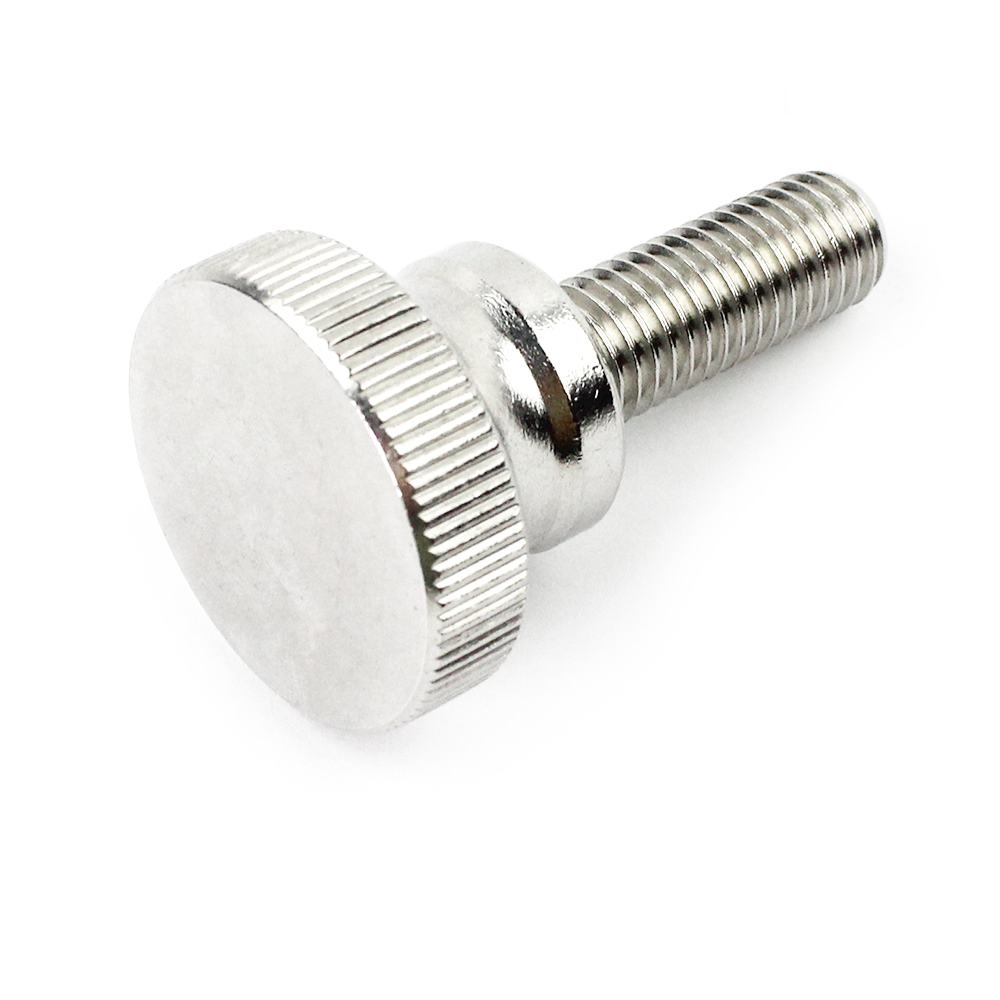
Many assemblies require tool-less entry and frequent adjustments. Access panels, delicate instrumentation, and server racks rely on manual hardware. You might evaluate a stainless steel thumb screw for these enclosures. The knurled head provides excellent grip for bare hands or gloved fingers. Technicians can adjust settings quickly without carrying tools. However, human interaction introduces a hidden corrosive element. Human sweat contains significant amounts of natural chlorides. Constant handling deposits salt directly onto the metal surface. Over time, these deposits accumulate deeply in the thread pitch and under the head. This specific exposure might dictate a shift in material. You may need to upgrade from 304 to 316. Frequently handled components in sensitive environments benefit from molybdenum. It prevents tarnishing and pitting from daily manual contact, keeping the hardware looking clean and functioning smoothly.
Material selection often extends beyond basic engineering preferences. Strict regulatory standards govern many global industrial sectors. The Food and Beverage industry operates under rigid guidelines to prevent contamination. FDA and NSF regulations dictate material choices heavily. They require 316 for direct food-contact surfaces universally. Processing equipment undergoes harsh caustic washdowns daily to kill bacteria. Cleaning chemicals will pit and degrade standard 304 quickly, creating microscopic crevices where pathogens can hide. The Marine and Offshore sectors face similar compliance hurdles. Organizations like Lloyd's Register set the baseline rules for vessel construction. The American Bureau of Shipping enforces strict material codes for offshore rigs. Subsea hardware and splash-zone components must survive extreme salinity and constant wave impact. These regulatory bodies mandate molybdenum-enriched alloys strictly. Compliance ensures safety, hygiene, and absolute legal protection for the manufacturer.
Global supply chains harbor hidden risks for hardware buyers. You face the constant threat of counterfeit materials entering your inventory. Unscrupulous suppliers sometimes mislabel 304 disguised as 316 to increase their profit margins. Visually, the two grades look completely identical. You cannot tell them apart by weight, color, or standard machining behavior. Installing fake 316 in a marine environment guarantees failure and massive liability. You must protect your projects through strict verification protocols.
Instruct your procurement team to demand documentation for every bulk order.
Request Material Test Reports (MTRs) from your suppliers before accepting delivery.
Verify the exact chemical composition listed on the MTR matches the 316 specification.
Confirm the presence of the required 2% to 3% molybdenum percentage on the sheet.
Implement spot-testing with chemical reagent kits upon receiving the shipment.
Use Positive Material Identification (PMI) testing guns for critical structural components.
Assembly practices dictate the ultimate lifespan of your hardware. Mixing different metals creates a dangerous electrochemical reaction. We call this destructive process galvanic corrosion. An electrolyte, like saltwater or heavily polluted rainwater, connects two dissimilar metals. The less noble metal acts as a sacrificial anode. It corrodes rapidly to protect the more noble cathode. You face risks when mixing different stainless grades in the same joint. Combining 304 nuts with 316 bolts can accelerate localized rusting on the nut. Mixing stainless steel with carbon steel or aluminum proves even worse. The carbon steel or aluminum will sacrifice itself and rust quickly, destroying the structural integrity of the bracket or panel. You must implement strict isolation practices if mixing metals is unavoidable. Use nylon washers to break the electrical connection between the bolt head and the panel. Apply dielectric grease to coat the contact surfaces thoroughly. Physical separation prevents the galvanic cell from forming.
Grade 304 remains the optimal, cost-effective choice for standard applications. It handles the vast majority of indoor and mild outdoor environments flawlessly. Grade 316 stands as an absolute necessity for harsh conditions. You must use it in chloride-rich, marine, or highly corrosive industrial settings. Balancing structural performance requires a disciplined approach. Follow these concise steps for your next project:
Audit the micro-climate for humidity, salt spray, or industrial solvents before ordering.
Evaluate the structural load requirements and establish specific torque limits for the assembly.
Implement strict lubrication protocols using anti-seize to prevent thread galling.
Request Material Test Reports to verify alloy authenticity before installation begins.
Isolate dissimilar metals using nylon washers to prevent galvanic corrosion.
A: We strongly advise against using 304 in marine environments. Saltwater and coastal air contain high levels of chlorides. These chlorides break down the protective oxide layer on 304. It will suffer from rapid pitting and crevice corrosion. You must upgrade to 316 for any marine or coastal application.
A: Yes, 316 is slightly more difficult to machine. The addition of molybdenum makes the alloy tougher. It tends to work-harden faster during cutting operations. Machinists must use sharp tools, rigid setups, and generous amounts of cutting fluid. Slower speeds and heavier feeds help prevent surface hardening.
A: Both grades are austenitic and generally non-magnetic in their raw form. However, manufacturing processes like cold heading or thread rolling alter their crystal structure. This cold working introduces slight magnetism. A magnet might stick weakly to a finished bolt, but this does not indicate poor quality.
A: You must reduce friction during installation. Avoid using high-speed power tools or impact drivers. Turn the nuts slowly to minimize heat generation. Always apply an anti-seize lubricant or a Teflon-based compound to the threads. This creates a physical barrier that prevents the metal surfaces from cold welding.
A: You should avoid mixing different grades whenever possible. While the galvanic difference between 304 and 316 is relatively small, it still exists. In the presence of an electrolyte like saltwater, the 304 nut may corrode slightly faster. Matching the grades ensures uniform corrosion resistance across the entire joint.
A: Yes, 316 can still rust under extreme conditions. It is highly corrosion-resistant, not corrosion-proof. Prolonged exposure to highly concentrated chlorides, lack of oxygen, or contact with plain carbon steel can initiate rust. Regular cleaning to remove surface contaminants helps maintain its protective passive oxide layer.