
Views: 0 Author: Site Editor Publish Time: 2026-03-20 Origin: Site
When engineers and buyers choose Spring Plungers, they are rarely buying “a small component.” They are buying predictable behavior. A spring plunger is expected to locate, index, lock, apply pressure, or provide a repeatable detent action—often thousands or millions of cycles—inside fixtures, automation lines, machine guards, tooling systems, and compact mechanical assemblies. In these applications, performance is not defined only by the spring force printed in a catalog. It is also defined by how the plunger feels in motion, how it wears over time, how it resists corrosion, and how stable it remains under temperature, moisture, and repeated contact. These outcomes are strongly influenced by one factor that is easy to overlook: materials.
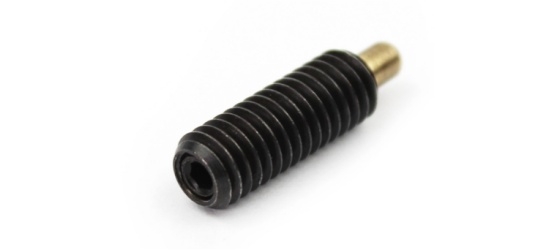
A spring plunger is a small mechanical device that typically consists of:
a threaded body
an internal spring
a plunger element (pin or ball)
optional locking features and sealing elements
Its job is to provide a controlled force and a repeatable contact point. Because the component relies on sliding movement and repeated contact, material choice affects:
smoothness of motion
resistance to sticking
wear behavior at contact surfaces
corrosion resistance in humid or washed environments
long-term stability under repeated cycling
In short, spring plungers “feel simple,” but they behave like precision parts. Materials strongly influence whether they remain consistent or degrade quickly.
The plunger body carries the threads, holds the spring, and typically contacts the machine frame or fixture. It needs strength, machinability, and environmental resistance.
Carbon steel bodies are commonly used when:
cost efficiency matters
the environment is relatively dry
corrosion exposure is limited
strong thread durability is needed
However, carbon steel usually relies on surface finishes (such as zinc plating or black oxide) to improve corrosion resistance.
Stainless steel bodies are often chosen when:
corrosion resistance is important
the environment is humid, wet, or exposed to cleaning
the plunger is used in outdoor, marine-adjacent, or washdown areas
long-term surface stability is needed
Stainless steel is frequently used in applications where rust risk could lead to sticking or inconsistent action.
Brass is sometimes selected for:
corrosion resistance in certain environments
non-sparking considerations
applications where softer body material is acceptable
reduced galling risk with certain assemblies
Brass is not typically chosen for the highest mechanical strength needs, but it has advantages in specific industries and assembly conditions.
Body Material | Key Strength | Common Trade-Off |
Carbon steel | strong threads, cost-effective | needs coating for corrosion control |
Stainless steel | strong corrosion resistance | higher material cost |
Brass | corrosion resistant, smooth machining | lower strength than steel |
The plunger tip or ball is the working contact point. This part faces direct wear, impact, sliding contact, and repeated engagement. Its material affects both durability and the feel of operation.
Hardened steel tips are widely used because they offer:
strong wear resistance
good contact stability
longer life in repeated engagement
reliable detent performance
They are common in fixtures, indexing systems, and industrial equipment.
Stainless tips are often chosen when:
corrosion resistance is essential
the contact area may be exposed to moisture or chemicals
rust could create rough motion or inconsistent engagement
Some spring plungers use softer tips (such as nylon or similar materials) to:
reduce marking on softer surfaces
reduce noise during engagement
protect delicate parts
Soft tips are useful when the contact surface must remain visually clean or unscuffed.
Tip Material | Best For | What It Changes |
Hardened steel | high wear, repeated indexing | durable contact, stable feel |
Stainless steel | wet or corrosive conditions | reduces rust-related sticking |
Soft tip (nylon) | surface protection | less marking, quieter contact |
The internal spring determines force consistency and fatigue life. Since springs are repeatedly compressed, the material must resist fatigue and maintain performance across cycles.
Spring steel is commonly used because it provides:
strong elasticity
stable force characteristics
good fatigue behavior in standard environments
Stainless spring options are useful when:
moisture exposure is frequent
corrosion inside the body could affect smooth motion
a longer stable service life is desired in humid environments
If a spring corrodes, it may:
lose force consistency
become rough or noisy in operation
contribute to sticking due to internal debris
For applications with high humidity or washdown, stainless spring material is often a practical choice.
Material is not only about base metal. Surface finishes can significantly change how a spring plunger performs in real use.
improve corrosion resistance
reduce friction
reduce wear on threads
support smoother plunger travel
reduce galling risk in stainless-to-stainless assemblies
plated carbon steel bodies help resist rust
surface-treated tips help reduce wear in contact zones
lubricated finishes can improve smooth action in repetitive cycles
For buyers, it is often helpful to specify not only the base material but also the surface finish that matches the environment.
Different working environments create different failure risks. Material selection is a way to control those risks proactively.
Carbon steel bodies with suitable finishes and hardened steel tips are often sufficient for:
assembly jigs
machine fixtures
general automation systems
Stainless body + stainless spring + corrosion-resistant tip can be a more reliable combination where:
condensation is common
cleaning routines are frequent
outdoor exposure exists
Soft-tip plungers are often preferred for:
painted panels
decorative assemblies
softer plastics and coated parts
Application Environment | Common Material Strategy |
General factory | carbon steel body + hardened tip |
High humidity / washdown | stainless body + stainless spring |
Surface-sensitive parts | soft tip + corrosion-resistant body |
High-cycle indexing | hardened tip + fatigue-resistant spring |
Often linked to:
corrosion inside the body
contamination and debris
surface wear at the plunger tip
Material improvements that help:
stainless body and spring in humid settings
better surface finishes
correct lubrication strategy for the application
Often linked to:
tip material too soft for the duty
high impact loading
abrasive environment
Material improvements that help:
hardened steel tips
wear-focused surface treatments
Often linked to:
body material too soft for torque conditions
mismatched assembly material
poor installation practices
Material improvements that help:
stronger body materials
suitable coatings
correct torque and mounting design
When selecting spring plungers, we recommend focusing on four questions:
What environment is the plunger used in?
Dry, humid, washdown, outdoor, chemical exposure.
What does the plunger contact?
Steel surface, aluminum surface, plastic, painted panel.
How many cycles and how much load?
High-frequency indexing vs occasional positioning.
What is the failure risk you want to avoid?
Rust, marking, wear, sticking, fatigue.
Selection Question | What It Helps Decide |
Humidity level | stainless vs carbon steel body |
Contact surface sensitivity | hardened vs soft tip |
Cycle count | fatigue-focused spring choice |
Corrosion risk | coatings and stainless options |
The best spring plunger is not simply the strongest one—it is the one whose materials match the real working conditions.
Materials are one of the most important performance drivers in Spring Plungers. The body material influences thread durability and corrosion resistance. The plunger tip or ball material determines wear, surface interaction, and smoothness. The spring material affects force consistency and fatigue behavior across cycles. When these material choices match the environment and duty cycle, spring plungers operate more smoothly, last longer, and behave more consistently in real assemblies.
At www.pdmindustry.com, we support customers with spring plunger options designed for industrial reliability across different environments and use cases. If you are selecting spring plungers for fixtures, automation, equipment housings, or high-cycle indexing and want to match the right materials to your application, you are welcome to visit www.pdmindustry.com to learn more and contact us for support.
Spring plunger bodies are commonly made from carbon steel, stainless steel, or brass, depending on strength needs and corrosion exposure.
Hardened steel tips are used to improve wear resistance and maintain stable contact performance in repeated indexing and positioning applications.
Stainless steel spring plungers are often chosen for humid, washdown, or outdoor environments where corrosion could lead to sticking or unstable action.
Yes. Corrosion resistance, surface finish, and tip material all influence friction behavior, which affects how smooth the plunger moves and how likely it is to stick over time.


